Owning a Porsche means Porsche Parts Cost typically range from under $50 for basic consumables like oil filters to several thousand dollars for major components such as brake systems, with routine maintenance items falling somewhere in between. enjoying exceptional engineering and performance, but it also requires understanding the financial commitment that comes with maintenance.
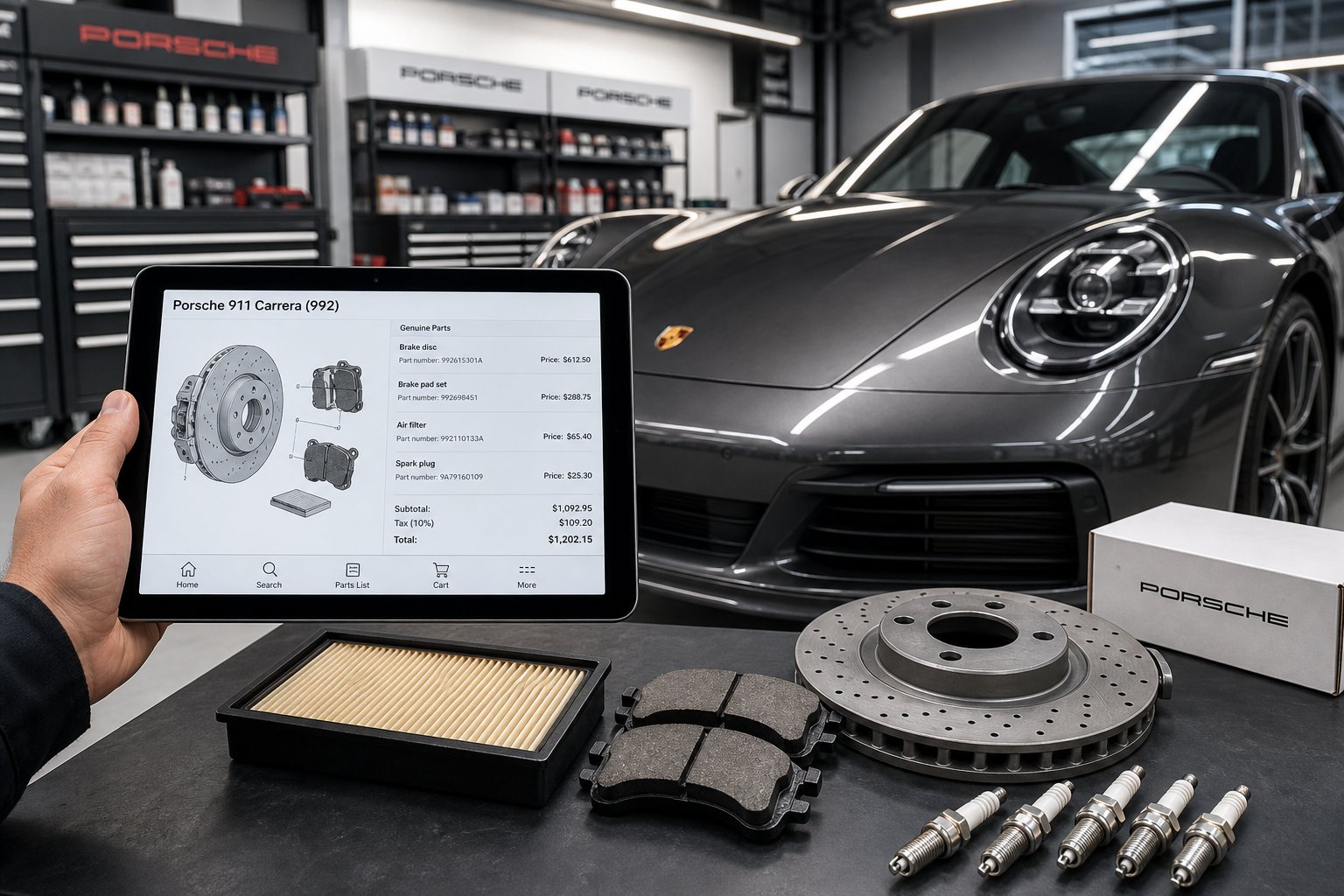
Many Porsche owners are surprised to learn that parts pricing varies significantly based on factors you can control. The difference between dealer and independent shop costs can reach 20-30% on identical services using the same genuine parts. Understanding these variables helps you make informed decisions about maintaining your vehicle without compromising quality or safety.
This guide breaks down what you’ll actually pay for common Porsche parts, explains the factors driving those costs, and provides practical strategies for budgeting effectively. You’ll learn how to balance quality with cost-efficiency while keeping your Porsche in peak condition.
Breakdown of Common Porsche Parts and Their Cost Drivers
Porsche parts pricing varies significantly based on whether you choose OEM or aftermarket options, which specific model you own, and how readily available the components are through supply channels.
OEM vs. Aftermarket Pricing Trends
OEM Porsche parts carry premium pricing because they’re manufactured to factory specifications and include the brand’s quality guarantee. These parts typically cost 20-30% more than aftermarket alternatives at dealers, though independent Porsche specialists can reduce this gap considerably.
Aftermarket options offer meaningful savings on routine maintenance items like brake pads, filters, and some engine components. You’ll find reputable aftermarket manufacturers producing parts that meet or exceed OEM standards at 30-50% lower prices. Performance parts show the widest pricing spread—OEM components can reach four and five figures, while quality aftermarket alternatives often cost half that amount.
Price comparison for common parts:
| Part Type | OEM Price Range | Aftermarket Range |
|---|---|---|
| Oil Filter | $15-$25 | $8-$15 |
| Brake Pads (set) | $200-$400 | $100-$250 |
| Air Filter | $40-$80 | $20-$50 |
Impact of Model and Year on Part Prices
Newer 992-generation 911s and current Cayenne models benefit from active production lines, which keeps parts relatively accessible and pricing more competitive. Older models, particularly 996 and 997 911s, face mixed pricing—some parts remain affordable due to high production volumes, while others become scarce and expensive.
Limited-production models command premium parts pricing across the board. If you own a GT3, Turbo, or special edition variant, expect to pay 40-60% more for model-specific components compared to base versions. Ultra-rare models like the 918 Spyder or Carrera GT require specialized parts that can reach five figures for single components.
Availability and Inventory Considerations
Parts availability directly impacts what you’ll pay and how long you’ll wait. High-turnover items like filters, spark plugs, and common brake components ship quickly and cost less due to competitive inventory among suppliers.
Specialized body panels, transmission components, and model-specific electronics face longer lead times and higher prices. Your local market conditions matter—urban areas with multiple Porsche specialists maintain better inventory depth than rural locations. Some discontinued parts require sourcing from overseas suppliers or specialty warehouses, adding 15-25% to base costs through shipping and handling fees.
Budgeting for Routine Maintenance and Wear Items
Routine maintenance on a Porsche typically costs $1,000 to $2,000 annually for basic services, with major service intervals pushing that to $2,000 to $3,500. Understanding the cost breakdown of filters, fluids, brakes, tires, and engine services helps you plan accurately for ownership expenses.
Essential Maintenance Parts (Filters, Belts, Fluids)
Oil changes for most Porsche models range from $300 to $600 at dealerships, with independent specialists charging 20-30% less. Your oil filter, air filter, and cabin filter replacements typically add $50 to $150 to each service depending on parts inventory availability.
Engine oil for Porsche vehicles requires specific synthetic formulations. You’ll need 8 to 11 quarts depending on your model, with OEM fluids costing $8 to $15 per quart.
Belt replacements vary significantly by model. Older models with timing belts may require $1,500 to $3,000 for replacement including labor. Newer models use chains that rarely need service.
Brake fluid flushes run $150 to $300 and should occur every two years. Coolant services cost $200 to $400, while transmission fluid changes range from $400 to $800 depending on whether you have a manual or PDK transmission.
Brakes, Tires, and Suspension Components
Performance brake pads cost $200 to $600 per axle for standard systems. Ceramic composite brakes, available on many models, require rotors that can cost $3,000 to $5,000 per axle when replacement becomes necessary.
Tire replacement represents a significant recurring expense. Performance tires wear faster than standard options, requiring replacement every 15,000 to 30,000 miles. A complete set costs $1,200 to $2,500 depending on your model and tire specifications.
Suspension components including control arms, bushings, and shock absorbers wear over time. Budget $800 to $2,000 for individual component replacements. Complete suspension overhauls on older models can reach $4,000 to $8,000.
Engine and Transmission Service Costs
Major scheduled services at 40,000 to 60,000-mile intervals involve comprehensive inspections and multiple fluid changes. These services cost $1,500 to $4,000 depending on required parts and labor rates.
Spark plug replacements occur every 40,000 to 60,000 miles. Parts cost $15 to $40 per plug, with labor adding $400 to $800 for six-cylinder models.
PDK transmission services require specialized tools and fluids. Expect $600 to $1,200 for complete fluid changes and filter replacements at recommended intervals.
Factors Affecting Porsche Part Pricing
Multiple elements influence how much you’ll pay for Porsche components, from how parts reach your mechanic’s shop to whether you’re restoring a vintage model. Understanding these pricing drivers helps you budget accurately and make informed purchasing decisions.
Supply Chain and Distribution Channels
The path parts take from manufacturer to your vehicle directly impacts final costs. Porsche maintains a controlled distribution network where genuine OEM parts flow through authorized dealerships and certified service centers, adding markup at each level to cover inventory management, storage, and logistics.
Independent shops accessing parts through aftermarket suppliers often offer lower prices because they work with simplified distribution chains. However, these channels may have limited stock for specialized components, forcing you to wait longer or pay premium shipping fees for expedited delivery.
Parts availability varies significantly by region. Urban areas with multiple Porsche dealers typically maintain larger inventory, which can reduce wait times and sometimes costs through competitive pricing. Rural locations face higher prices due to limited local stock and increased shipping expenses from distant distribution centers.
Brand Value and Goodwill in Pricing
Porsche commands premium pricing partly through decades of established brand reputation and customer loyalty. The company’s goodwill in the luxury automotive market allows it to position parts as precision-engineered components rather than commodity items, justifying higher price points compared to mass-market manufacturers.
Genuine Porsche parts carry the brand’s warranty backing and quality assurance, which many owners view as worth the additional expense. This perceived value means you’re paying not just for the physical component but for the confidence that it meets exact factory specifications.
The willingness of Porsche owners to pay premium prices reinforces the pricing structure. Since the target customer base typically prioritizes performance and reliability over cost savings, Porsche maintains higher margins on parts without significant market pressure to reduce prices.
Rarity and Classic Porsche Considerations
Older and limited-production models present unique pricing challenges due to discontinued parts and reduced manufacturing runs. A component for a 1980s 911 may cost three to five times more than an equivalent modern part simply because production has ceased and remaining inventory is finite.
Classic Porsche restoration drives up prices for rare components through collector demand. Parts that were inexpensive when new become valuable as surviving vehicles decrease and enthusiasts compete for original-specification replacements. Some specialized vendors reproduce discontinued parts, but these often carry premium pricing to offset small production volumes.
Certain vintage models require parts sourced from specialty suppliers or salvage operations, adding complexity and cost to procurement. You may face extended search times and higher prices when inventory exists only in limited quantities worldwide.
Original vs. Replacement and Aftermarket Parts
Original Porsche parts typically cost 30-70% more than aftermarket alternatives, though both options serve different purposes depending on your vehicle’s age, intended use, and your budget priorities.
Assessing Quality and Warranty Differences
OEM Porsche parts come with manufacturer backing and guaranteed fitment for your specific model year. These parts carry Porsche’s warranty, which typically covers 2 years or 24,000 miles when installed by an authorized dealer.
Aftermarket parts vary widely in quality across different price tiers. Premium aftermarket suppliers often manufacture to OE specifications and may even be the same factories that produce OEM components, just without Porsche branding. Budget aftermarket options sacrifice precision tolerances and material quality to hit lower price points.
Key warranty distinctions:
- OEM parts include comprehensive coverage through Porsche dealerships
- Premium aftermarket typically offers 1-year limited warranties
- Budget aftermarket may provide 90-day to 1-year coverage with restrictions
- Installation by independent shops may void certain OEM warranties
The quality gap matters most for critical systems like brakes, suspension, and engine components where tolerances directly affect performance and safety.
Deciding When Aftermarket Makes Sense
Aftermarket parts work well for high-wear maintenance items on daily drivers. Oil filters, brake pads, wiper blades, and air filters from reputable aftermarket brands deliver adequate performance at 40-60% of OEM pricing.
For track-focused builds or performance upgrades, specialized aftermarket manufacturers often exceed OEM specifications. Companies focusing exclusively on performance parts may offer superior materials and engineering for specific applications.
Situations favoring aftermarket:
- Routine maintenance on vehicles over 10 years old
- Track or competition modifications requiring upgraded performance
- Non-critical cosmetic components
- Owner-performed repairs where labor costs aren’t a factor
Situations requiring OEM:
- Warranty-period repairs on newer vehicles
- Safety-critical systems (airbags, ABS components, structural parts)
- Complex electronic modules and sensors
- Heritage or collector vehicles where authenticity matters
Potential Impact on Resale Value
Using OEM parts preserves your Porsche’s resale value and buyer goodwill more effectively than aftermarket alternatives. Documented service history showing genuine parts typically adds 5-15% to resale prices for vehicles under 10 years old.
Classic and collectible Porsches require OEM or NOS (new old stock) parts to maintain authenticity. A 1970s 911 with correct original components commands substantially higher values than one with period-incorrect aftermarket substitutes.
Modern Porsches lose less value from strategic aftermarket use. Buyers accept quality aftermarket parts for consumables and maintenance items on higher-mileage vehicles where the focus shifts from originality to proper function and maintenance records.
Pre-purchase inspections often flag extensive aftermarket use as a negotiation point. Prospective buyers may request 5-10% price reductions when significant components use non-OEM parts, viewing it as deferred maintenance or quality concerns.
Cost-Saving Tips and Long-Term Strategies for Porsche Owners
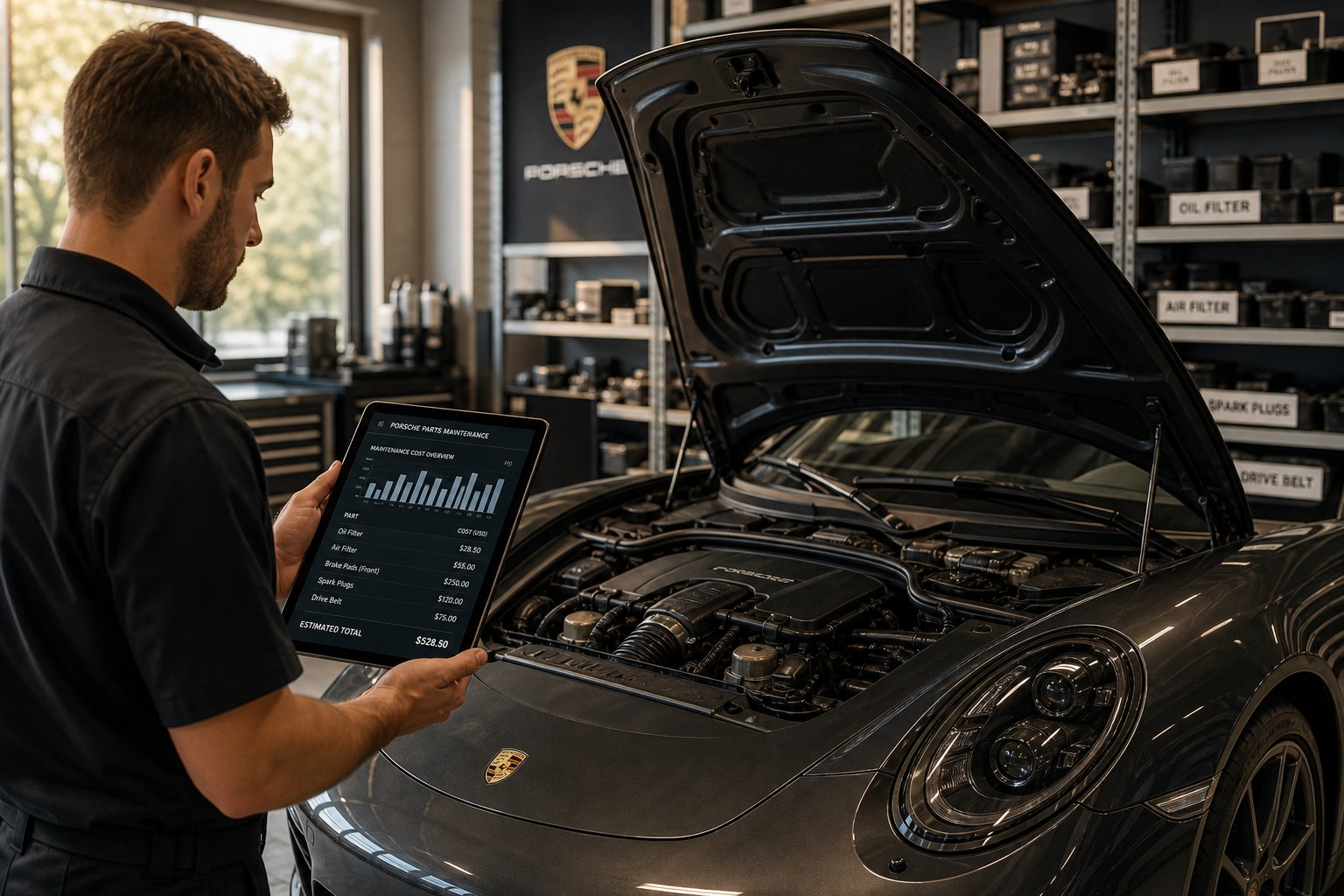
Smart Porsche ownership requires strategic planning around parts procurement and vehicle care. Building an inventory of common wear items, connecting with experienced owners, and maintaining service records can reduce costs by 20-30% over the vehicle’s lifetime.
Sourcing and Stocking Common Parts
You should maintain a small inventory of frequently replaced items like oil filters, air filters, and brake fluid. These parts have long shelf lives and purchasing them during sales or in bulk quantities reduces per-unit costs significantly.
OEM parts from online Porsche specialists often cost 15-25% less than dealer pricing for identical components. You can verify part numbers through your owner’s manual or Porsche’s online parts diagrams before purchasing.
Consider stocking model-specific items that commonly fail, such as ignition coils for 996/997 models or coolant expansion tanks for water-cooled engines. Having these parts ready eliminates emergency pricing pressure and reduces vehicle downtime when repairs become necessary.
Leveraging Clubs and Online Communities
Porsche clubs and online forums provide access to experienced owners who share vetted mechanic recommendations and parts sourcing strategies. Members often organize group buys for common maintenance items, reducing individual costs through volume discounts.
Regional Porsche Club of America chapters frequently host technical sessions where you can learn basic maintenance procedures directly from specialists. These skills allow you to handle simple tasks like brake pad replacement or fluid changes yourself.
Online communities maintain databases of common issues, TSBs, and recall information specific to your model year. This knowledge helps you anticipate problems before they become expensive failures and identify which aftermarket parts offer genuine value versus those that compromise quality.
Preserving Goodwill Through Proper Maintenance
Maintaining complete service records builds goodwill that translates to higher resale values and better treatment from service providers. Documented maintenance history can increase resale value by $2,000-$5,000 on most models.
You should photograph and digitally store all receipts, even for minor items like wiper blades or cabin filters. This documentation proves the vehicle received proper care and helps warranty claims if component failures occur.
Following factory-recommended service intervals prevents small issues from escalating into major repairs. A $400 coolant system service prevents a $3,000 engine rebuild. Independent specialists often provide better pricing while maintaining the same service quality as dealerships, using identical OEM parts and following factory procedures.