Owning a Porsche means making informed decisions about maintenance and repairs, and one of the most common questions is whether aftermarket parts are a viable option. Yes, you can use aftermarket parts on your Porsche, but the choice depends on the specific component, your performance expectations, and how you plan to use your vehicle. Not all aftermarket parts are created equal, and understanding the differences between your options is essential for maintaining your car’s performance and value.
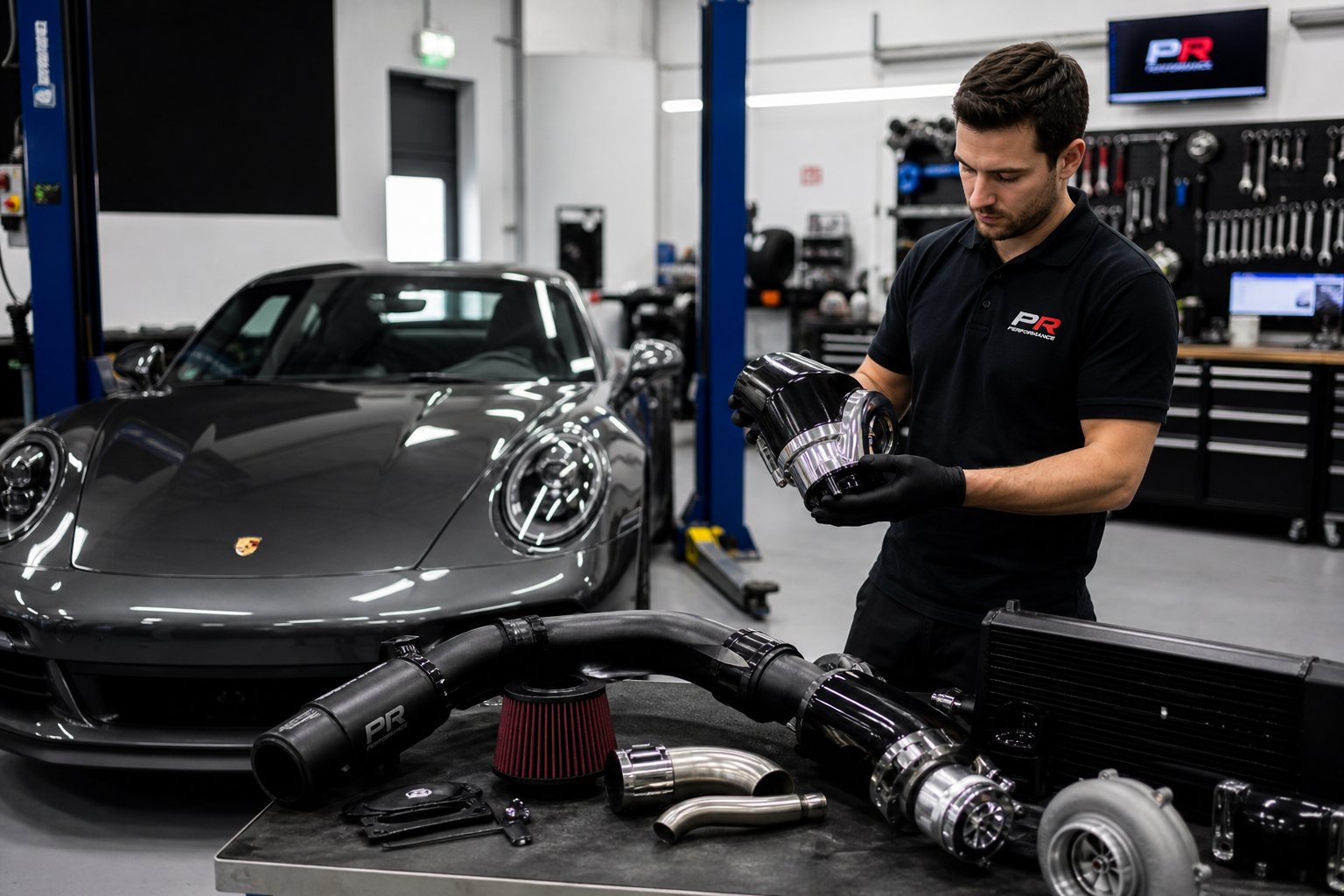
The decision between genuine Porsche parts and aftermarket alternatives involves more than just price comparisons. Factors like part quality, warranty coverage, compatibility with your specific model, and long-term reliability all play important roles. Some aftermarket manufacturers produce components that meet or exceed factory specifications, while others may compromise on fit or durability.
This guide breaks down what you need to know about different part categories, how to evaluate quality and compatibility, and when aftermarket options make sense for your Porsche. You’ll learn how to navigate the parts market with confidence and make choices that align with your ownership goals.
Understanding OEM, Genuine, OE, and Aftermarket Porsche Parts
The parts market for your Porsche includes several distinct categories that differ in manufacturing origin, quality standards, and pricing. Knowing how to identify genuine Porsche parts from OEM, OE, and aftermarket options helps you make informed purchasing decisions.
Definitions and Key Differences
Genuine Porsche parts are manufactured specifically for Porsche and sold through official Porsche dealers with the Porsche brand label. These components meet Porsche’s exact specifications and come with a 2-year unlimited-mileage warranty.
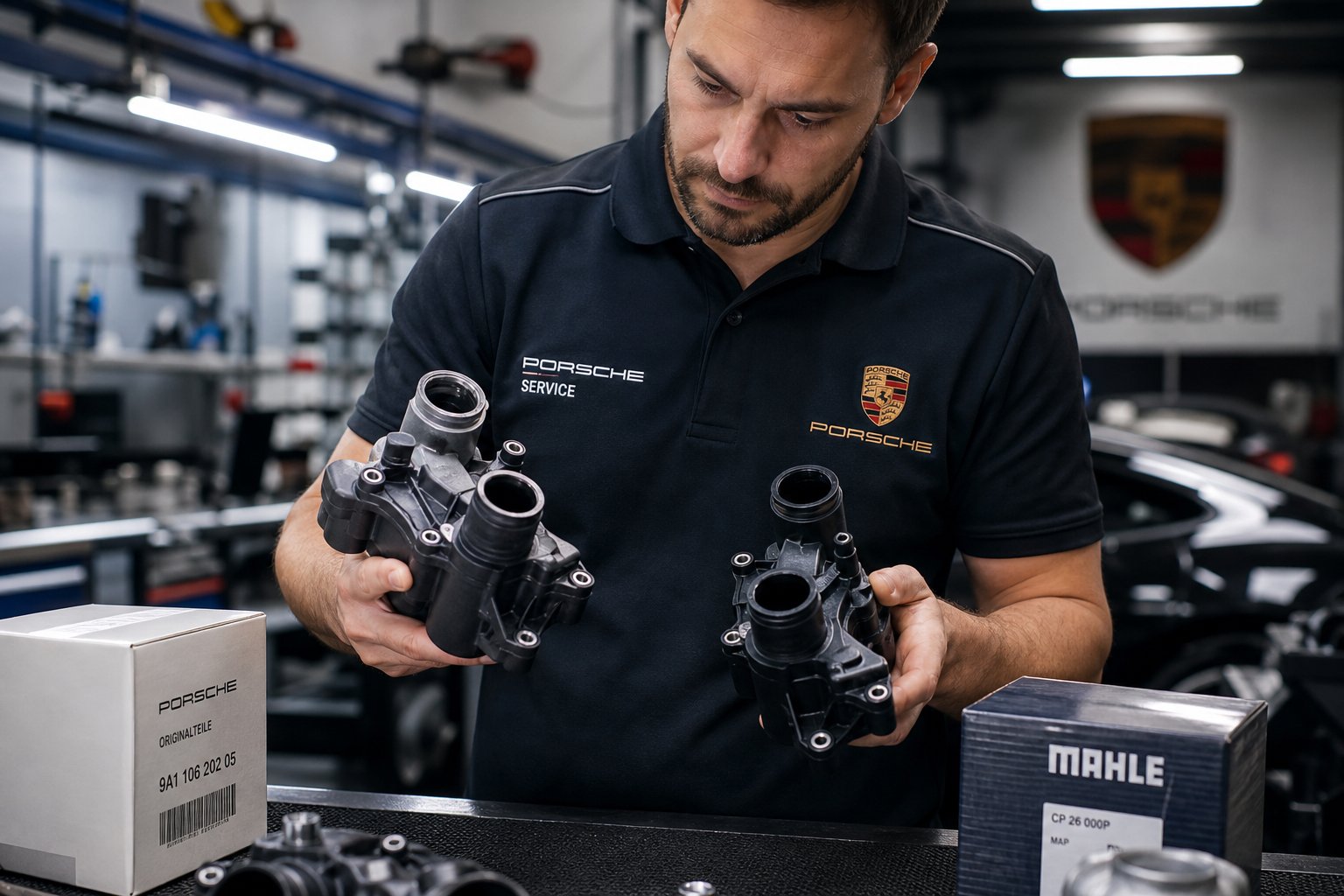
OEM parts (Original Equipment Manufacturer) are produced by the same suppliers that make genuine Porsche parts but are sold without Porsche branding. Companies like Bosch, Brembo, and Mahle manufacture components for Porsche’s assembly line and also sell identical parts under their own names at lower prices.
OE parts (Original Equipment) represent the same quality as OEM parts but may come in different packaging. The distinction between OE and OEM is often used interchangeably in the industry.
Aftermarket parts are manufactured by third-party companies not affiliated with Porsche or its original suppliers. These range from budget-friendly replacements to performance-enhanced upgrades. Quality varies significantly across aftermarket brands, with some matching or exceeding OEM standards while others fall short.
Packaging, Labeling, and Part Numbers
Genuine Porsche parts arrive in distinctive Porsche-branded packaging with official logos and holographic security features. The packaging includes a Porsche part number starting with specific prefixes that correspond to different vehicle systems.
OEM and OE parts typically display the manufacturer’s branding instead of Porsche logos. You’ll find part numbers from suppliers like Bosch, VDO, or Sachs rather than Porsche part numbers. These parts often include cross-reference information linking them to the corresponding Porsche part number.
Aftermarket parts show the third-party manufacturer’s branding and use their own numbering systems. Reputable aftermarket suppliers provide compatibility charts that reference original Porsche part numbers. Resources like Pelican Parts offer detailed cross-reference databases to help match aftermarket components to your specific Porsche model.
How to Verify Authenticity
Check the Porsche part number against official databases available through Porsche dealer websites or authorized parts retailers. Genuine parts include security features like holographic stickers, PET (Porsche Engineering Technology) markings, or embedded authentication codes.
Compare the packaging quality and printing clarity. Counterfeit parts often have blurry logos, misspellings, or inconsistent fonts. Examine the part itself for quality of construction, material finish, and manufacturer stamps.
Purchase from authorized dealers or established retailers with verification policies. Suppliers like Pelican Parts and official Porsche centers authenticate their inventory and provide documentation. Request proof of origin if buying high-value components, and be wary of prices significantly below market rates, which often indicate counterfeit or substandard products.
Selecting Parts for Repairs and Upgrades
The choice between OEM and aftermarket parts depends on the system you’re working on and how you use your Porsche. Engine internals and safety systems require different considerations than routine maintenance items or performance modifications.
Critical Systems: When OEM Is Essential
Engine internals demand OEM specifications to maintain proper tolerances and reliability. Components like pistons, bearings, camshafts, and crankshafts operate under extreme stress and heat. Aftermarket alternatives may not meet Porsche’s metallurgy standards or precise machining requirements.
Brake systems present safety concerns that warrant careful consideration. While OEM brake components guarantee exact fitment and tested performance, premium aftermarket options from established manufacturers can match or exceed factory standards. However, avoid budget brake parts for critical components like calipers, rotors, and master cylinders.
Fuel system components including injectors, fuel pumps, and pressure regulators should use OEM parts. These systems require exact flow rates and pressure specifications that generic alternatives may not replicate. Electronic engine components like sensors, control modules, and ignition systems also benefit from OEM reliability to avoid diagnostic issues and poor engine performance.
Wear Items and Routine Maintenance
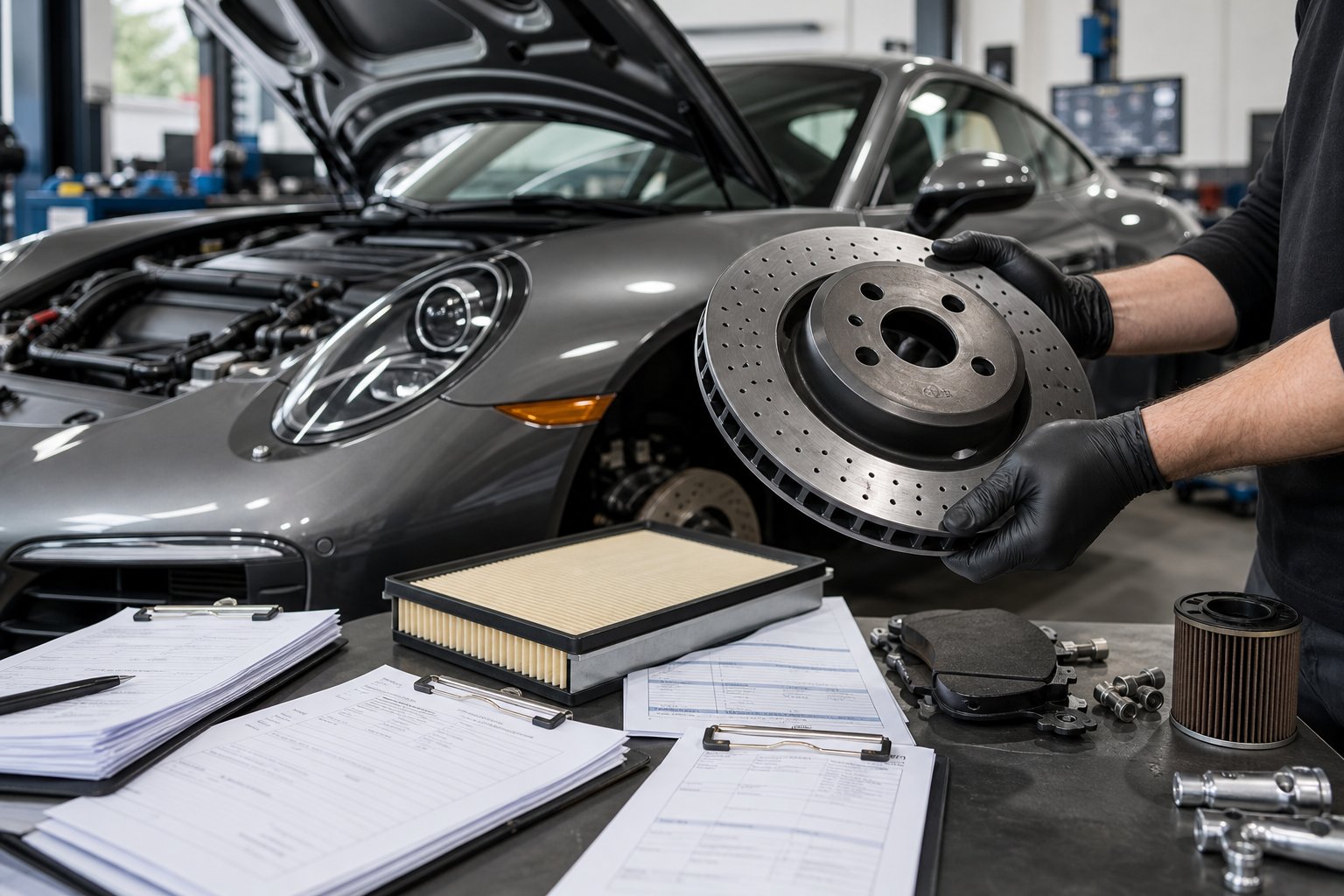
Standard maintenance items offer the most flexibility for aftermarket choices. Brake pads from quality aftermarket manufacturers often provide excellent performance at lower costs than OEM. Air filters, oil filters, and cabin filters are suitable for aftermarket replacement when you select reputable brands that meet OEM specifications.
Wiper blades represent straightforward aftermarket purchases since they’re simple components with widely available quality options. Fluids, belts, and hoses also work well as aftermarket items when you choose products meeting Porsche’s specifications.
For oil changes, synthetic oils from major manufacturers that meet Porsche’s viscosity and performance ratings deliver proper protection. These routine items don’t require OEM pricing since aftermarket versions perform identically when properly specified.
Performance Upgrades and Track Use
Exhaust systems from premium aftermarket manufacturers offer performance gains and sound improvements over stock components. Established brands design these systems specifically for your Porsche model with proper fitment and tuning.
Suspension arms, coilovers, and sway bars benefit from quality aftermarket options engineered for performance driving. Companies specializing in Porsche performance parts often exceed OEM capabilities for track use. These performance upgrades include brake cooling ducts, oil coolers, and reinforced mounting points.
Forced induction, engine management, and drivetrain modifications require careful research and professional installation. Premium aftermarket parts for these systems come from manufacturers with proven track records in Porsche racing and performance applications. Quality aftermarket suppliers provide engineering data, installation instructions, and support that budget alternatives lack.
Model-Specific Considerations and Compatibility
Each Porsche model presents unique compatibility challenges when selecting aftermarket parts. Water-cooled sports cars typically offer more aftermarket support than SUV platforms, while electronic control modules require extra caution regardless of model line.
Boxster, Cayman, and 911 Variants
The 911 family receives the most aftermarket attention, with strong support for the 997, 991, and 992 generations. You’ll find extensive options for suspension components, brake upgrades, and performance exhaust systems. The 991 and 992 benefit from shared platform components, making parts crossover more predictable.
Key compatibility factors:
- Engine position: The 911’s rear-engine layout differs from mid-engine Boxster and Cayman configurations
- Generation-specific mounting: 997 suspension parts rarely fit 991 or 992 models without modification
- Boxster/Cayman overlap: The 981 and 718 generations share many chassis components, expanding your options
You must verify part numbers against your specific model year and VIN. A part marketed as “fits 911” may only work on certain sub-variants within that generation.
Cayenne and Macan Parts Availability
Cayenne and Macan SUV models share platforms with Volkswagen Group vehicles, which affects aftermarket availability differently than sports car lines. The Cayenne often uses components from the Audi Q7 and VW Touareg, while the Macan shares DNA with the Audi Q5.
This platform sharing creates advantages for maintenance items like brake pads, filters, and suspension bushings. You can source quality aftermarket parts originally designed for VW Group applications. However, Porsche-specific calibrations for adaptive dampers and air suspension systems require careful matching.
Aftermarket support remains strongest for wear items and basic upgrades. Specialized systems like Porsche Active Suspension Management (PASM) limit your options compared to 911 variants.
PDK, DME, and Specialized Components
PDK transmissions and DME engine management systems represent areas where OEM parts typically remain your safest choice. These components integrate deeply with your Porsche’s electronic architecture and require precise calibration.
Critical considerations for electronic components:
- DME software updates may reject non-OEM sensors or modules
- PDK clutch packs and mechatronic units require factory-level programming
- Communication protocols between control units can fail with incompatible parts
Certain sensors and actuators connected to the DME accept quality aftermarket alternatives, but you should confirm compatibility through VIN-specific lookup tools. Performance tuners offer aftermarket PDK software, though these modifications typically void warranties and may cause long-term reliability concerns.
Evaluating Brands, Suppliers, and Quality Standards
Selecting parts for your Porsche requires understanding which manufacturers meet quality standards and how to verify authenticity. Established OEM suppliers and reputable aftermarket brands maintain specifications that protect your vehicle’s performance, while counterfeit parts pose risks to safety and reliability.
Trusted OEM and OE Manufacturers
OEM parts come directly from Porsche’s supply chain and maintain factory specifications. These components arrive in original packaging with Porsche logos and part numbers that confirm authenticity.
OE manufacturers produce parts for Porsche but sell them under their own brand names. Companies like Bosch, Sachs, ATE, and Brembo supply components to Porsche during vehicle assembly and offer identical parts through independent channels at lower prices.
You can verify OE quality by checking part numbers against Porsche’s Electronic Parts Catalogue (EPL). Many OE parts share the same manufacturing codes as their OEM equivalents but lack Porsche branding. These parts meet the same tolerances and materials standards without the premium markup.
Aftermarket and Performance Parts Brands
Premium aftermarket manufacturers design parts that match or exceed OEM specifications. Brands like Brembo offer upgraded brake systems engineered specifically for Porsche models, providing enhanced performance while maintaining compatibility.
Quality aftermarket suppliers focus on cost-effective alternatives that meet industry standards. Look for parts with certifications like ISO 9001 or TÜV approval, which indicate manufacturing quality and testing protocols.
Performance-oriented aftermarket parts can improve specific functions beyond factory specifications. However, you should verify that these modifications don’t void your warranty or affect other vehicle systems. Check manufacturer documentation for compatibility with your specific Porsche model and year.
Avoiding Counterfeits and Ensuring Fit
Counterfeit parts often feature incorrect materials, poor machining, or missing safety certifications. Verify supplier credentials by checking business ratings, customer reviews, and their authorization status with manufacturers.
Authentic parts include proper packaging, documentation, and traceable part numbers. Compare the part number on the component itself against what appears on packaging and invoicing materials.
Purchase from established distributors who provide return policies and warranty coverage. Examine the seller’s reputation through independent reviews and their years in business. Request verification of part origin and ask for certification documents when buying high-value components like brake systems or engine parts.
Cost, Warranty, and Service Records
Aftermarket parts typically cost 20-40% less than OEM alternatives, but this savings comes with trade-offs in warranty protection and documentation that affect your Porsche’s long-term value. Understanding these financial implications helps you make informed decisions about maintenance and modifications.
Price Differences and Value Analysis
Aftermarket parts generally offer immediate cost savings ranging from $50 to several thousand dollars depending on the component. A typical aftermarket exhaust system might cost $2,000 compared to $3,500 for the OEM equivalent, while brake pads could save you $100-200 per set.
The value equation changes when you factor in longevity and fit. Genuine Porsche parts are engineered specifically for your model’s tolerances and specifications, which can reduce installation time and eliminate fitment issues. Aftermarket alternatives may require additional adjustment or modification, adding labor costs that erode initial savings.
Quality varies significantly across aftermarket manufacturers. Premium aftermarket brands often match OEM quality at moderate savings, while budget options may require earlier replacement. For Porsche ownership, calculating cost-per-mile rather than upfront price provides a more accurate value assessment.
Warranty Coverage by Part Type
Genuine Porsche parts include a 2-year unlimited-mileage warranty against defects. This coverage protects you from manufacturing failures and provides replacement parts at no cost during the warranty period.
Aftermarket parts carry varying warranty terms set by individual manufacturers. Some premium aftermarket brands offer comparable coverage, while budget options may provide only 90 days to one year of protection.
Installing aftermarket parts doesn’t automatically void your factory warranty, but it creates important limitations. If an aftermarket component causes damage to other systems, Porsche can deny warranty claims related to that failure. For example, an aftermarket intake that damages your engine may leave you responsible for repair costs that would otherwise be covered.
Service Records and Resale Impacts
Complete service records using OEM parts strengthen resale value and buyer confidence. Prospective buyers and dealers scrutinize maintenance history, with documented use of genuine Porsche parts typically adding 5-10% to resale prices on the used market.
Mixed service records showing aftermarket parts raise questions about cost-cutting and proper maintenance. Performance modifications like exhaust systems or suspension components can attract enthusiast buyers but may deter others seeking unmodified examples.
Keep detailed receipts and documentation for all service work regardless of parts used. Include part numbers, installation dates, and mileage to demonstrate consistent maintenance. This documentation proves particularly valuable for certified pre-owned eligibility, which requires verified service history and OEM components for most major systems.