Luxury European cars like BMW, Mercedes-Benz, Audi, Porsche, Ferrari, and Lamborghini need specialized suspension parts to maintain their performance and comfort. These vehicles use advanced suspension systems that include control arms, shock absorbers, air suspension components, and performance upgrade kits. When parts wear out or you want to improve your car’s handling, finding the right replacement parts matters.
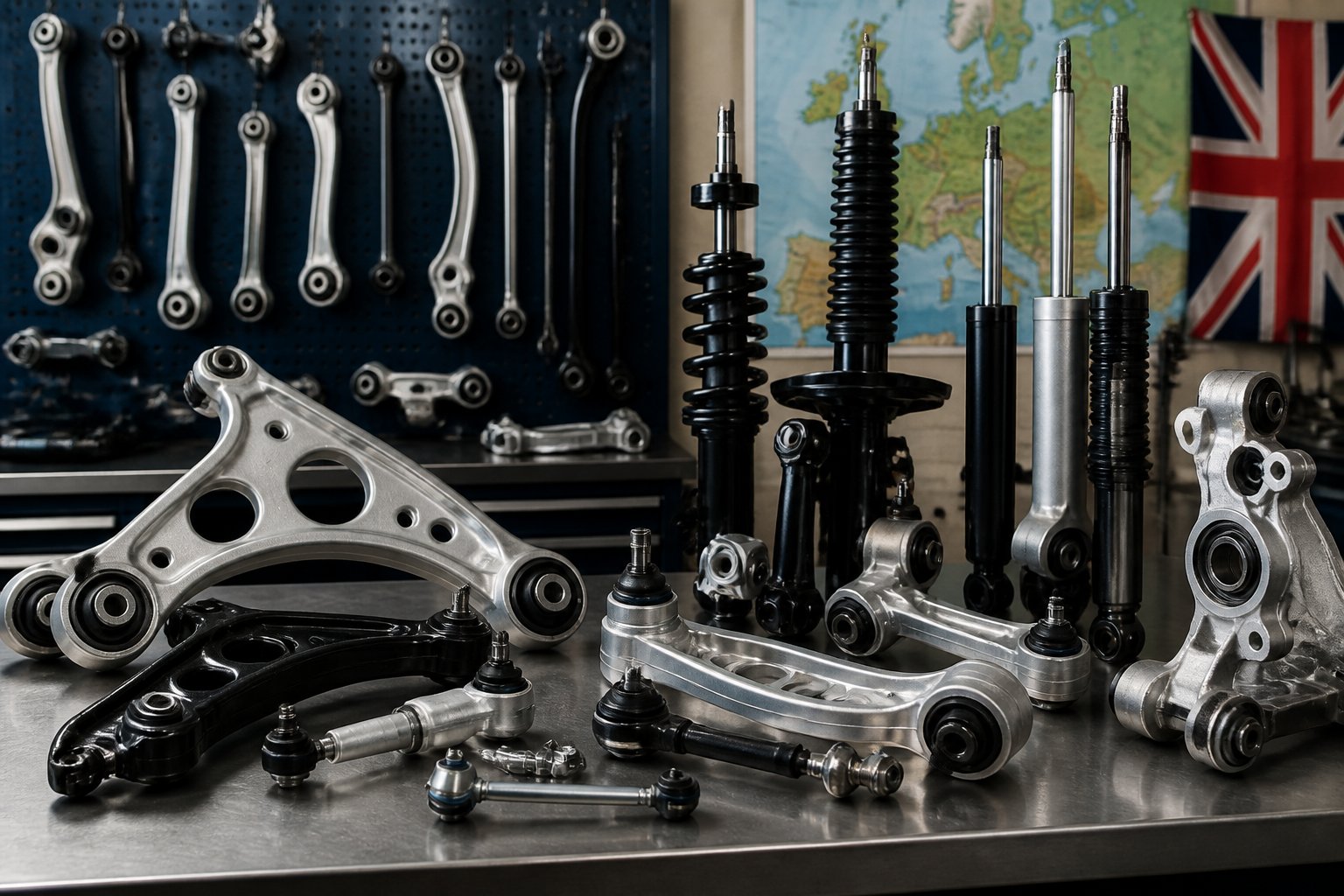
Getting the correct suspension components for your European car ensures safe driving, better handling, and a smoother ride. Many owners face common issues like suspension noise in BMW models, air suspension failures in Mercedes vehicles, or worn shock absorbers in Audi cars. High-performance brands like Porsche, Ferrari, and Lamborghini require even more specific parts to keep their advanced suspension systems working properly.
You can find suspension parts through official dealers, specialty shops in the UK and Europe, and trusted aftermarket suppliers. Understanding which parts your car needs and when to replace them helps you avoid costly repairs and keeps your vehicle performing as it should.
Key Takeaways
- European luxury cars require specific suspension parts including control arms, shock absorbers, and air suspension components for proper performance
- Common suspension problems include worn parts, air suspension failures, and noise issues that need professional attention
- You can source replacement parts from dealers, specialty suppliers in the UK and Europe, or quality aftermarket brands
Understanding European Car Suspension Systems
European luxury and performance brands engineer their suspension systems with specific priorities in mind, from comfort-focused designs to track-ready setups. The components work together to connect your wheels to the chassis while managing forces from the road surface.
Core Suspension Components and Their Functions
Control arms form the structural link between your car’s frame and the wheel assembly. These metal components allow vertical wheel movement while maintaining proper alignment angles. Most European performance cars use double wishbone or multi-link designs with upper and lower control arms.
Shock absorbers control the speed at which your suspension compresses and rebounds. They dampen spring oscillations to prevent your car from bouncing after hitting bumps. Performance-oriented brands often use adjustable dampers that let you change compression and rebound settings.
Springs support your vehicle’s weight and absorb initial impact forces. European manufacturers use coil springs in most applications, with spring rates calculated for specific weight distributions. Air springs appear in luxury models from Mercedes and some Audi variants, offering adjustable ride height.
The anti-roll bar connects left and right suspension components to reduce body lean during cornering. Thicker bars decrease roll but can affect ride comfort on uneven surfaces.
Comparing Suspension Designs Across BMW, Mercedes, Audi, Porsche, Ferrari, and Lamborghini
BMW M cars use adaptive suspension with electronically controlled dampers and reinforced control arms. The systems prioritize driver feedback and quick response times for performance driving.
Mercedes-Benz favors air suspension in luxury models like the S-Class, providing adjustable ride height and comfort settings. Their AMG performance division adds adaptive dampers with multiple driving modes.
Audi RS models combine adaptive dampers with sport-tuned springs and upgraded anti-roll bars. Quattro all-wheel-drive variants require specific suspension geometry to accommodate the drivetrain layout.
Porsche 911 models use MacPherson struts in front and a multi-link rear setup. The rear-engine layout demands unique suspension tuning compared to front-engine competitors.
Ferrari and Lamborghini employ sophisticated magnetorheological dampers that adjust in milliseconds. These systems use magnetic fields to alter fluid viscosity within the shock absorbers, providing both track capability and street usability.
The Impact of Suspension on Stability and Handling
Your suspension geometry determines how wheels contact the road during cornering, braking, and acceleration. Camber angles, caster, and toe settings change as the suspension moves through its travel range.
Worn control arm bushings create unwanted movement in the suspension system. This affects steering precision and causes alignment angles to shift under load. You’ll notice decreased stability during lane changes and inconsistent handling.
Spring rates and damper settings control weight transfer during direction changes. Stiffer setups reduce body roll and improve response but transmit more road imperfections to the chassis. Your car’s stability depends on matching these components to the intended use and tire specifications.
Multi-link designs with separate upper and lower control arms allow engineers to tune suspension characteristics independently. This gives brands like Audi and BMW precise control over how the wheels move relative to the body during different driving situations.
BMW Suspension: Upgrades, Control Arms, and Noise Solutions
BMW suspension systems rely on precision-engineered components like control arms and ball joints to deliver the brand’s signature handling. When these parts wear out, you’ll notice symptoms like noise and poor alignment that require prompt attention.
BMW Control Arm Functions and Signs of Wear
Control arms connect your BMW’s chassis to the wheels and work with ball joints to allow vertical movement while keeping your wheels properly positioned. These suspension arms, sometimes called wishbones, contain bushings that absorb vibration and reduce noise during normal driving.
Worn control arms show specific warning signs. You might hear clunking sounds when driving over bumps or feel vibrations through the steering wheel. Your car may pull to one side during braking or acceleration.
Visual inspection reveals cracked or torn bushings, which appear as black rubber components at each end of the control arm. Ball joints develop excessive play, which you can check by trying to move the wheel up and down with the car lifted. Both upper and lower control arms can fail, though lower units typically wear faster due to higher stress loads.
Suspension Noise Diagnosis and Fixes for BMW Models
Suspension noise in BMWs comes from several sources that require different fixes. Clunking sounds often point to worn bushings in the control arms or loose suspension components. Squeaking noises suggest dry or damaged ball joints that need lubrication or replacement.
Start your diagnosis by listening to when the noise occurs. Sounds during turns indicate issues with ball joints or stabilizer links. Noises over bumps suggest problems with control arm bushings or shock absorbers. Creaking while braking points to worn suspension mounts.
A proper suspension noise fix requires replacing failed parts rather than attempting repairs. Control arm bushings cannot be effectively serviced separately on most BMW models, so you’ll need complete control arm assemblies. Ball joints may be replaceable individually or as part of the control arm depending on your specific model.
M Suspension Kits: Benefits and Installation
BMW M suspension kits transform your car’s handling through upgraded components designed for performance driving. These kits include stiffer springs, performance shock absorbers, and reinforced suspension mounts that reduce body roll and improve response.
The benefits extend beyond sharper handling. M suspension components use higher-quality materials that often last longer than standard parts. The lower ride height improves aerodynamics and gives your BMW an aggressive stance.
Installation requires mechanical skill and proper tools. You’ll need spring compressors, torque wrenches, and alignment equipment. The process involves removing your existing suspension components and installing the M kit parts according to BMW specifications. Professional installation ensures correct fitment and safety.
Wheel Alignment Considerations After Replacement
Wheel alignment becomes critical after any suspension repair involving control arms or ball joints. New parts change your suspension geometry, which affects how your wheels contact the road.
Your BMW needs alignment within manufacturer specifications for camber, caster, and toe angles. Incorrect alignment causes uneven tire wear, poor handling, and reduced fuel efficiency. The front suspension requires adjustment after control arm replacement since these components directly affect wheel positioning.
Schedule alignment immediately after suspension work. Driving on misaligned wheels damages your new parts and tires quickly. Professional alignment shops use computerized equipment to measure and adjust all angles to BMW standards, ensuring your suspension performs correctly.
Mercedes-Benz: Air Suspension and Replacement Essentials in the UK
Mercedes-Benz vehicles use sophisticated suspension systems that require proper maintenance and quality parts for optimal performance. Air suspension systems need specialized repair knowledge, while traditional components like bushings and ball joints follow standard replacement procedures.
Air Suspension Repair and Troubleshooting
Mercedes introduced their AIRMATIC air suspension system in 1999 to provide adjustable ride height and comfort. When your air suspension fails, you’ll notice sagging corners, rough ride quality, or warning lights on your dashboard. The system uses air springs, compressors, and control modules that can wear out over time.
Common repair issues include air leaks in the suspension bags, failed compressors, and faulty height sensors. You need a garage with diagnostic equipment to identify which component has failed. Air suspension repair typically costs more than traditional suspension work because the parts are complex and labor-intensive.
Many UK owners face choices between full system replacement and individual component repairs. If multiple parts have failed, some mechanics recommend converting to coil springs, though this eliminates the air suspension benefits.
Traditional Suspension Components for Mercedes
Your Mercedes uses standard suspension components alongside or instead of air suspension, depending on the model. Control arms connect your wheels to the chassis and contain bushings and ball joints that wear over time. The lower control arm typically needs replacement every 80,000 to 100,000 miles.
Shock absorbers control how your Mercedes handles bumps and corners. You should replace them in pairs to maintain balanced handling. Signs of worn shocks include excessive body roll, nose diving during braking, and uneven tire wear.
Common replacement parts:
- Control arms (upper and lower)
- Bushings
- Ball joints
- Anti-roll bar links
- Shock absorbers
Each suspension arm contains rubber bushings that deteriorate from age and road conditions. You can replace just the bushings or the entire suspension arm assembly.
Choosing Between Original Equipment and Aftermarket Parts
Original equipment parts match your Mercedes factory specifications exactly. They cost more but guarantee proper fitment and performance. Your local Mercedes dealer stocks most suspension components, though delivery times vary across the UK.
Aftermarket parts offer lower prices with varying quality levels. Premium aftermarket brands produce parts that meet or exceed original equipment standards. Budget options exist but may compromise ride quality or longevity.
When you find parts for your Mercedes, verify they match your specific model year and chassis code. Some suppliers in the UK specialize in Mercedes suspension components and offer warranties comparable to original equipment. Your garage can help identify which parts suit your budget and performance needs.
Audi Suspension: Shock Absorbers and RS Performance Upgrades
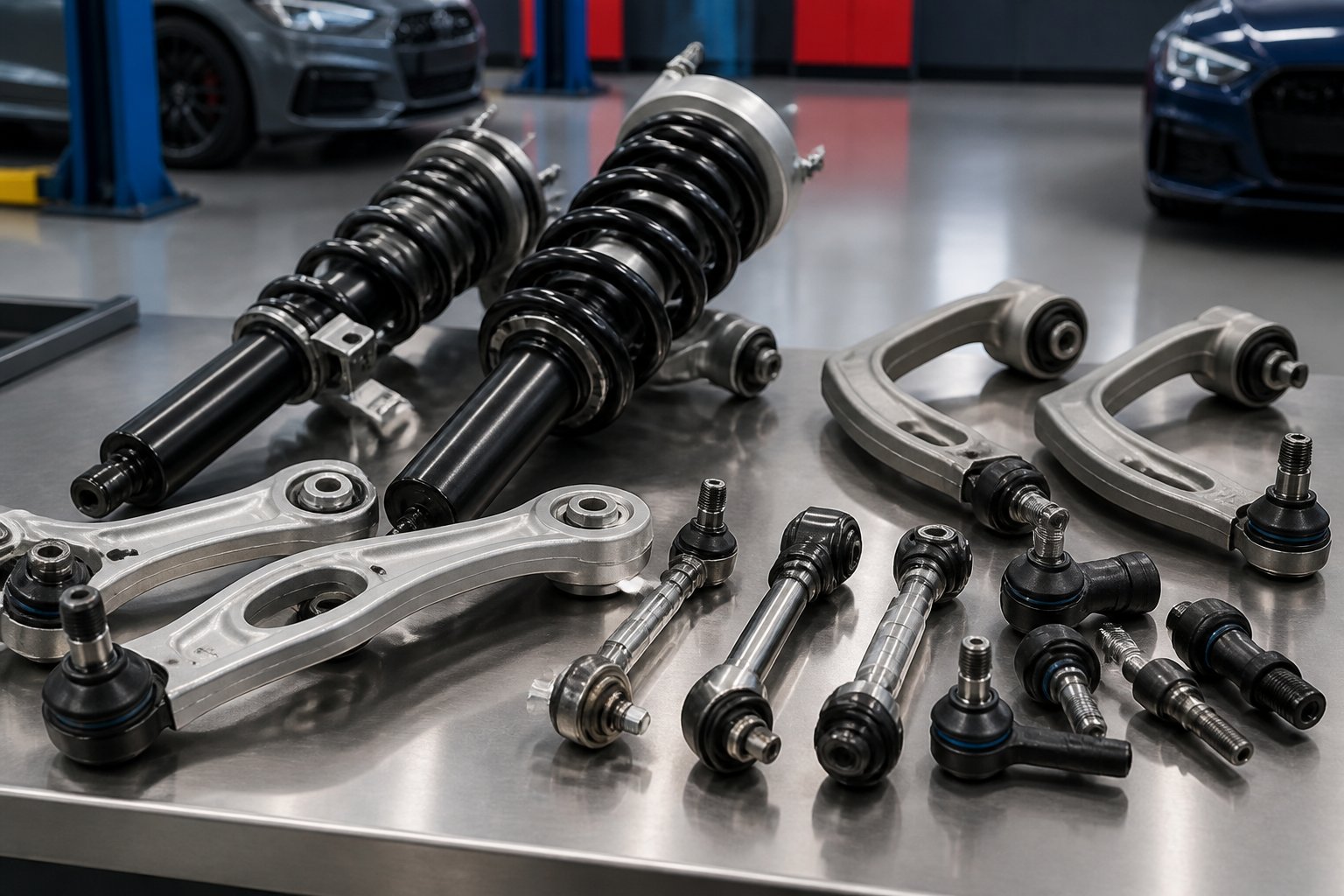
Audi vehicles use specific shock absorbers and dampers designed for European driving conditions, while RS models feature performance-tuned suspension components. Understanding the differences between standard and RS suspension parts helps you make informed decisions about replacements and upgrades.
Shock Absorber Types for Audi European Models
Your Audi’s shock absorbers work with dampers to control spring movement and keep your tires in contact with the road. European-spec Audi models typically use gas-charged monotube or twin-tube shock absorbers.
Monotube dampers contain a single tube with a floating piston that separates oil and gas. These provide better heat dissipation and more consistent performance during hard driving. Twin-tube designs use an inner and outer tube, offering a smoother ride for daily driving.
When shopping for Audi shock absorbers in Europe, you’ll find OEM replacements and aftermarket options. OEM parts maintain your car’s original ride quality and handling characteristics. Aftermarket dampers from brands like Bilstein and Koni offer adjustable settings for firmness and rebound.
Standard Audi models use comfort-oriented dampers with softer valving. Sport package vehicles get firmer dampers that reduce body roll. You should replace shock absorbers every 50,000 to 100,000 miles depending on driving conditions and road quality.
Upgrading to Audi RS Suspension Parts
Audi RS suspension parts feature stiffer spring rates, revalved dampers, and revised geometry compared to standard models. The RS components reduce body roll by up to 30% and lower ride height by 10-25mm.
RS dampers use specific valving that handles aggressive cornering while maintaining acceptable ride comfort. These dampers work with progressive-rate coil springs that get stiffer as they compress. The combination provides better control during hard acceleration and braking.
Installing RS suspension on a non-RS Audi requires matching components. You need RS control arms, dampers, springs, and stabilizer bars to maintain proper geometry. Mixing standard and RS parts causes alignment issues and poor handling.
Key RS Suspension Benefits:
- Improved cornering stability
- Reduced body roll
- Lower center of gravity
- Firmer damping control
Your suspension upgrade should include new tie rod ends and stabilizer links. These wear items affect alignment and handling precision.
Coil Springs and Stabilizer Links in Audi Chassis
Coil springs in your Audi support vehicle weight and determine ride height. Spring rates are measured in pounds per inch or Newtons per millimeter. Standard Audi springs range from 150-250 lb/in front and 200-300 lb/in rear.
Stabilizer links connect the sway bar to your suspension. These small but critical parts prevent excessive body lean during cornering. Worn stabilizer links create clunking noises over bumps and reduce handling precision.
You should inspect stabilizer links every 30,000 miles for torn boots and loose ball joints. Failed links allow the stabilizer bar to move independently, eliminating its anti-roll function. Replacement takes 30-60 minutes per side and requires basic hand tools.
Aftermarket coil springs lower your Audi 20-40mm and increase spring rates by 15-25%. Lowering springs improve appearance and reduce center of gravity but may decrease ride comfort. You must also replace tie rod ends when changing springs to ensure proper alignment settings.
Porsche, Ferrari, and Lamborghini: High-Performance Suspension Solutions
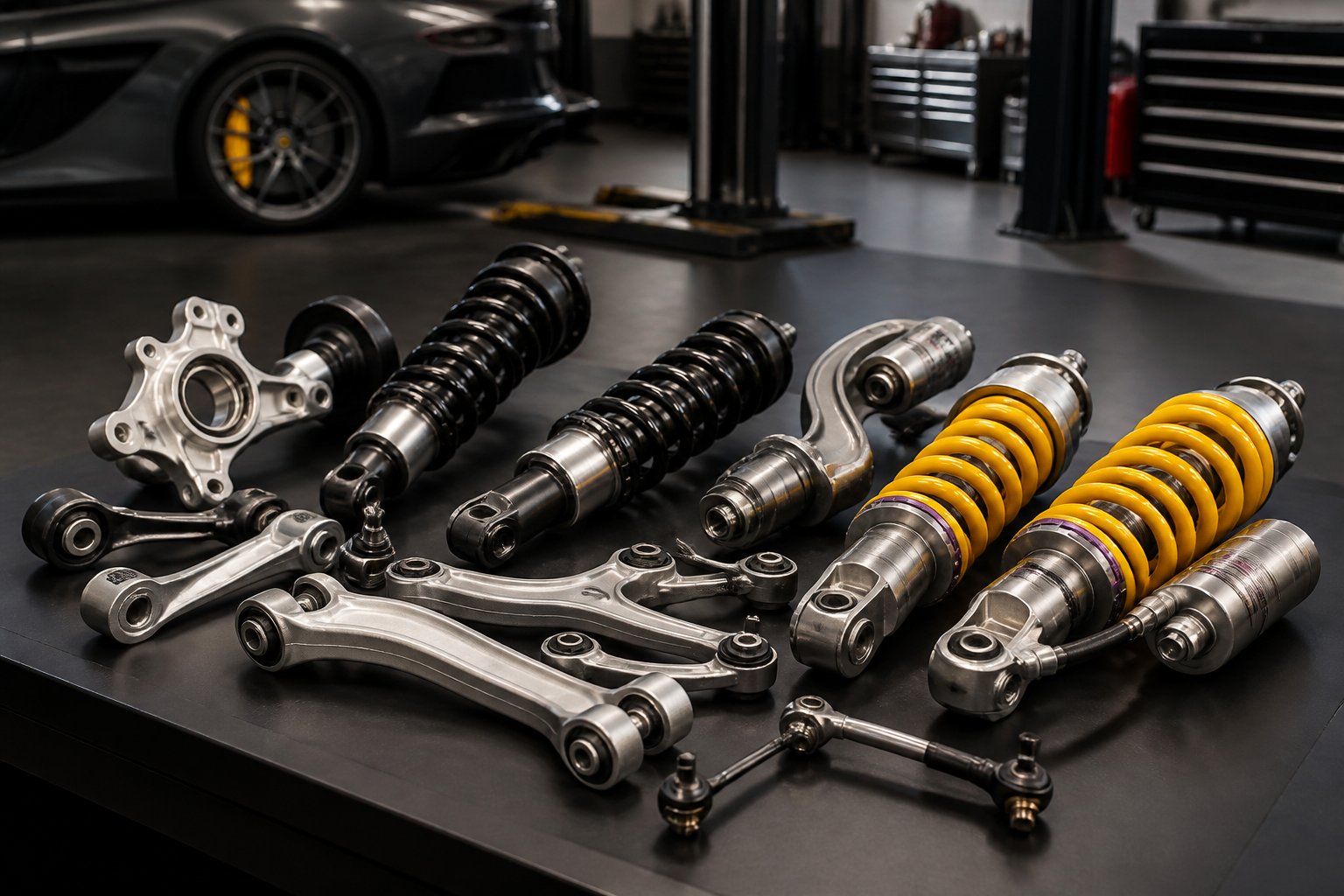
High-performance suspension systems in Porsche, Ferrari, and Lamborghini vehicles require specialized parts and specific upgrade approaches. Each manufacturer uses unique suspension designs that demand precise maintenance and component selection.
Porsche Suspension Upgrade Strategies
Porsche suspension upgrades focus on improving both street comfort and track performance. You can replace factory shock absorbers with adjustable units that let you fine-tune compression and rebound settings.
The 911 platform uses MacPherson struts in front with lower control arms and an antiroll bar. When you upgrade these components, you should also check your wishbone bushings and stabilizer links. These small parts wear out over time and affect handling.
Performance upgrades often include:
- Coilover kits that lower ride height by 10-30mm
- Adjustable control arms for better wheel alignment
- Upgraded stabilizer bars to reduce body roll
- High-performance bushings for improved response
You need to get a proper wheel alignment after any suspension work. Porsche vehicles require specific camber and toe settings to maintain their handling balance.
Ferrari Suspension Components and Replacement
Ferrari suspension parts are model-specific and require exact replacements. Your Ferrari uses double wishbone suspension at all four corners, which provides precise control but needs regular inspection.
Shock absorbers typically need replacement every 40,000-60,000 miles depending on driving style. You’ll notice increased body roll or a bouncy ride when they wear out.
Common Ferrari suspension repairs include:
- Front and rear shock absorber replacement
- Wishbone ball joint renewal
- Stabilizer link replacement
- Control arm bushing updates
Ferrari uses special tolerances for wheel alignment. Your alignment must stay within factory specifications to prevent tire wear and maintain stability at high speeds.
Lamborghini Suspension System Design and Maintenance
Lamborghini suspension systems combine aluminum components with advanced shock absorber technology. Your Lamborghini likely has magnetorheological dampers that adjust in milliseconds based on road conditions.
The suspension geometry uses wide control arms and specific mounting points. When you replace parts, you must use components that match factory specifications. Aftermarket parts can change your vehicle’s handling characteristics.
Maintenance priorities include checking stabilizer links every 20,000 miles and inspecting wishbone bushings for cracks or separation. You should also monitor shock absorbers for fluid leaks or reduced damping force. Wheel alignment requires specialized equipment that accounts for the low ride height and wide track width of these vehicles.
Maintenance, Replacement Parts, and Trusted Brands
Quality parts and regular maintenance protect your suspension system from premature wear. Proper inspection schedules and the right lubricants extend component life and preserve handling performance.
Choosing Quality Parts and Reputable Brands
OEM parts from BMW, Mercedes, Audi, Porsche, Ferrari, and Lamborghini guarantee perfect fitment and performance standards. These brands engineer their components to exact specifications for your specific model.
Aftermarket options like Bilstein, Eibach, and KW offer performance upgrades at various price points. Lemförder and Meyle provide reliable replacement parts for European vehicles at lower costs than OEM. When you find parts online, verify the manufacturer’s reputation and check for compatibility with your vehicle’s year and model.
Avoid unknown brands with unusually low prices. Cheap control arms and shock absorbers fail quickly and compromise safety. Stick with established manufacturers that offer warranties and have proven track records in the European market.
Regular Suspension Inspection and When to Replace
Inspect your suspension every 12,000 miles or annually. Look for worn bushings, leaking shock absorbers, and cracked control arm mounts. You’ll notice symptoms like unusual tire wear, pulling to one side, or clunking noises over bumps.
Replace control arms when bushings show cracks or excessive play. Shock absorbers typically need replacement between 50,000 and 100,000 miles depending on driving conditions. Ball joints and tie rod ends wear faster on rough roads.
Check brake fluids during suspension work since the systems connect. Worn suspension affects brake performance and tire contact. Replace filters and inspect ignition coils during major suspension service to maximize your shop visit efficiency.
Essential Fluids and Lubricants for Suspension Longevity
Air suspension systems in Mercedes and Audi models require specific brake fluids that meet DOT 4 or DOT 5.1 standards. These fluids handle the hydraulic pressure without degrading rubber components.
Grease control arm bushings and ball joints with lithium-based lubricants rated for high-pressure applications. Some sealed components don’t need lubrication, but replaceable parts benefit from proper greasing during installation.
Change brake fluids every two years regardless of mileage. Old fluid absorbs moisture and corrodes suspension mounting points. Use only manufacturer-recommended lubricants for air suspension compressors and pneumatic components to prevent seal damage.
Additional Systems: Lighting, Braking, and Interior Protection
Performance vehicles require more than just suspension components to maintain their capability. Quality lighting ensures visibility in poor conditions, brake pads directly affect stopping power, and protective floor mats preserve cabin integrity during regular use.
Headlights and Fog Lights: Importance in Safety
Your headlights serve as the primary visibility system during night driving and adverse weather conditions. Modern high-performance vehicles use halogen, LED, or xenon headlight systems. Each type offers different brightness levels and beam patterns that affect how well you see the road ahead.
Fog lights mount lower on your vehicle’s front end. They project a wide, flat beam pattern that cuts through fog, rain, and snow without reflecting glare back at you. Unlike headlights that aim forward and slightly upward, fog lights direct their output closer to the road surface.
You should replace headlight bulbs in pairs to maintain consistent color temperature and brightness across both sides. Mismatched bulbs create uneven illumination that reduces your ability to judge distances and spot road hazards. Factory specifications indicate the correct bulb type, wattage, and mounting configuration for your specific vehicle model.
Brake Pads and Braking Distance Considerations
Brake pads create friction against your vehicle’s rotors to convert kinetic energy into heat. This friction generates the stopping power you need. The compound material in your brake pads determines performance characteristics, noise levels, and dust production.
Performance brake pads use different compounds than standard versions. Ceramic compounds produce less dust and operate quietly but may not perform as well when cold. Semi-metallic pads offer strong initial bite and heat resistance but create more brake dust and rotor wear.
Your braking distance depends on pad condition, rotor surface quality, and operating temperature. Worn pads reduce friction surface area and increase stopping distances. You should measure pad thickness regularly and replace pads before they wear below 3mm thickness. Most manufacturers recommend inspection every 10,000 miles for performance vehicles.
Floor Mats and Interior Protection for Comfort
Floor mats protect your vehicle’s carpet from dirt, moisture, and wear. All-weather rubber mats trap water and debris in raised edges, while carpet mats provide a more finished appearance for daily driving. Both types prevent stains and damage to factory carpeting underneath.
You need mats that fit your specific vehicle model. Generic mats can slide under pedals and create safety hazards. Proper floor mats include retention clips or hooks that secure them to factory anchor points in your footwell.
Quality mats extend your interior’s lifespan and maintain resale value. They’re easier and cheaper to replace than damaged carpeting. You should remove and clean mats monthly to prevent moisture buildup that leads to mold and unpleasant odors.
Frequently Asked Questions
Control arms, bushings, and suspension mounts wear gradually and can cause handling problems or noise that seem minor at first but indicate parts that need attention. Air suspension systems and shock absorbers follow different failure patterns and require specific diagnostic steps to identify which components have failed.
What are the most common symptoms of worn front control arms, and how urgently should they be replaced?
Worn control arms usually show up as clunking noises when you drive over bumps or turn the steering wheel. You might notice uneven tire wear on the inside or outside edges of your front tires. The steering can feel loose or wander on the highway.
Your car may also pull to one side during braking or normal driving. The ball joints or bushings in the control arm can separate completely if they wear too much, which makes the wheel lose proper alignment with the chassis. You should replace worn control arms within a few weeks of noticing symptoms because a complete failure can cause you to lose control of the vehicle.
How can I confirm whether a suspension knock or clunk is caused by bushings, ball joints, or top mounts?
You can check bushings by having someone rock the steering wheel back and forth while you watch the control arms and suspension links for excess movement. Bushings that are torn or compressed will show visible gaps or allow the metal parts to move more than a few millimeters. Ball joints make noise when they have play between the ball and socket, which you can test by lifting the wheel off the ground and pushing the tire at the top and bottom to feel for movement.
Top mounts usually knock when you turn the steering wheel while stationary or hit bumps at an angle. You can often feel the knock through the steering column or hear it directly above the wheel under the hood. A helper can bounce the corner of the car while you listen near the strut tower to pinpoint the location.
What should I check to ensure replacement suspension components are genuine and compatible with my exact trim and chassis code?
Your chassis code appears on a plate or sticker in the door jamb, trunk, or engine bay and identifies the exact variant of your model. BMW uses codes like F30 or G20, while Mercedes uses codes like W212 or W205. This code determines which control arms, links, and mounts fit your specific suspension setup.
Check the VIN against parts catalogs to confirm compatibility before ordering. Different engine sizes, drive configurations, and suspension packages use different parts even within the same model year. The part number on your old component should match the replacement exactly, including any revision letters or suffixes.
Genuine parts have manufacturer logos, part numbers etched or printed clearly, and come in branded packaging. OEM-equivalent parts from suppliers like Lemforder, Sachs, or Bilstein often supply the original parts to BMW, Mercedes, and Audi and are identical in quality. Avoid parts with no brand markings or packaging that looks generic.
When is it better to replace shocks and struts in pairs versus replacing only a single corner?
You should replace shocks and struts in pairs on the same axle because mismatched damping rates cause the car to handle unevenly. A new shock on one side will control body movement better than the worn shock on the other side, which makes the car lean or dive unpredictably during cornering and braking. The difference in damping also wears suspension bushings and mounts unevenly.
If one shock has failed completely from a leak or impact damage and the others are relatively new, you can replace just that corner. Most mechanics recommend axle pairs if your shocks have more than 50,000 miles or are over five years old. All four corners should be replaced together if you’re upgrading to a performance suspension kit or if the rear shocks are also worn.
What are the key differences between OEM, OEM-equivalent, and performance suspension kits, and how do they affect ride quality and handling?
OEM parts restore your suspension to factory specifications with the same spring rates, damping curves, and ride height. These parts maintain the balance between comfort and handling that the manufacturer designed. OEM-equivalent parts from original suppliers meet the same specifications and perform identically but cost less because they don’t carry the vehicle manufacturer’s branding.
Performance suspension kits use stiffer springs and revalved shocks to reduce body roll and improve response during cornering and braking. You’ll feel bumps and road imperfections more directly through the cabin. These kits often lower the ride height by 20 to 40 millimeters, which improves aerodynamics and lowers the center of gravity.
Sports-oriented kits from companies that supply parts for BMW M, Mercedes AMG, or Audi RS models offer adjustable damping so you can tune the ride quality. Track-focused setups sacrifice most comfort for maximum grip and control. Your choice depends on whether you prioritize comfort for daily driving or sharper handling for performance driving.
What are the usual causes of air suspension sagging or compressor overrun, and which parts are typically replaced to fix it?
Air springs develop leaks in the rubber bladder or at the crimp where the bladder joins the metal endcap. You’ll notice one corner sitting lower than the others after the car has been parked for several hours. The compressor runs more frequently to maintain ride height, which you can hear as a pump or motor sound from under the car or in the trunk area.
The compressor itself wears out from overwork if a leak forces it to run constantly. Valve block failures cause the system to lose air from multiple corners or prevent the system from adjusting ride height properly. The air dryer and filter clog with moisture and debris, which damages the compressor and valves.
Most repairs involve replacing the leaking air spring or springs on the affected axle. You should replace the compressor if it runs continuously or makes grinding noises. The valve block needs replacement if the system can’t raise or lower the car even though the compressor runs and the springs hold pressure. Replacing the air dryer and filter cartridge during any major air suspension repair prevents future compressor damage.