Owning a Porsche means understanding its specific maintenance needs to keep it performing at its best. Most Porsche models require service every 10,000 miles or 12 months, whichever comes first, with major services needed every 40,000 miles or 4 years. This schedule ensures your vehicle maintains its performance standards and reliability.
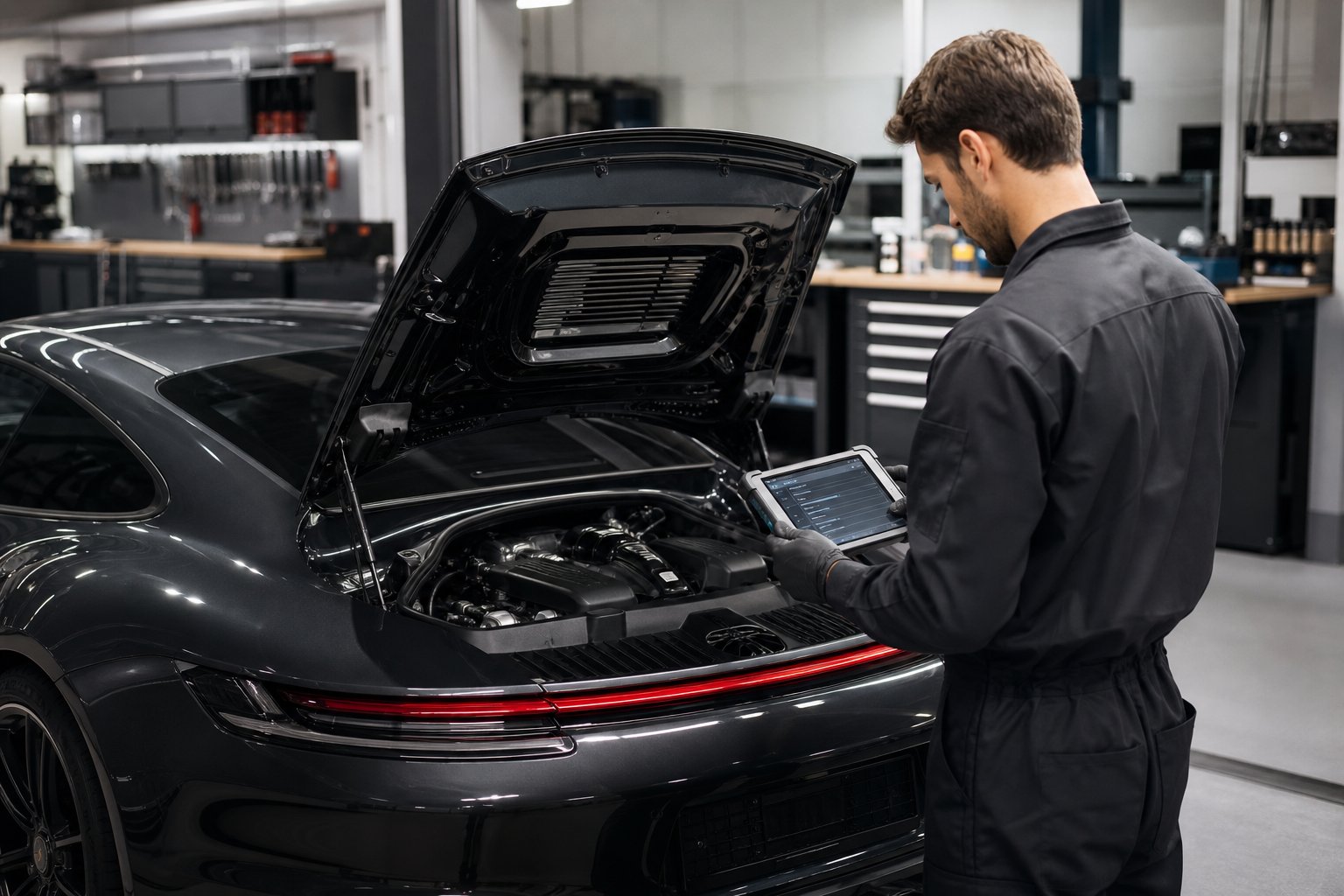
The timing of your Porsche’s maintenance depends on several factors beyond just mileage. Your driving conditions, climate, and specific model can all influence how often you should schedule service appointments. Some Porsche specialists recommend more frequent intervals for vehicles in demanding environments.
Understanding what to expect at each service interval helps you budget appropriately and avoid unexpected repairs. This guide covers the standard maintenance schedule, the specific tasks required at each interval, and how different Porsche models may have unique requirements. You’ll also learn about your options for service providers and how proper maintenance protects your investment.
Understanding Porsche Service Intervals
Porsche maintenance follows a structured approach based on both time elapsed and miles driven. Most models require minor service at specific intervals, with major service occurring less frequently but addressing more comprehensive mechanical needs.
Time and Mileage Guidelines
Your Porsche requires service every 10,000 miles or 12 months, whichever comes first. This dual-criteria approach ensures your vehicle receives attention even if you drive infrequently.
Standard Service Schedule:
- Minor Service: Every 10,000 miles or 12 months
- Major Service: Every 40,000 miles or 4 years
Some specialists recommend more frequent service intervals of 7,000 miles or 6 months, particularly if you drive in demanding conditions. This conservative approach provides additional protection for your engine and components.
The time-based component matters because fluids and materials degrade even when your Porsche sits idle. A car driven 5,000 miles over 18 months still needs service based on the elapsed time.
Differences Between Minor and Major Service
Minor service includes essential maintenance tasks that keep your Porsche running properly between major intervals. These appointments typically involve oil and filter changes, fluid level checks, and basic inspections.
Major service encompasses everything in a minor service plus additional component replacements and inspections. Your Porsche receives brake fluid replacement, air filter changes, spark plug replacement, and comprehensive system diagnostics during these appointments.
The cost difference reflects the scope of work. Minor service generally costs less, while major service years increase your maintenance budget due to parts replacement and extended labor time.
Impact on Performance and Longevity
Following your Porsche’s maintenance schedule directly affects how your vehicle performs and how long it lasts. Regular oil changes prevent engine wear, while scheduled inspections catch developing issues before they become failures.
Models like the 911, Macan, and Panamera maintain their performance characteristics when you adhere to recommended intervals. Skipped services accelerate component degradation and reduce reliability.
Your Porsche’s resale value also depends on documented maintenance history. Buyers pay premium prices for vehicles with complete service records showing adherence to factory intervals.
Essential Maintenance Tasks by Schedule
Porsche maintenance follows a structured timeline where specific components require attention at predetermined intervals. Oil changes occur most frequently, while tasks like spark plug replacement happen less often but remain equally critical to your vehicle’s performance.
Oil and Filter Changes
Your Porsche requires an oil and filter change every 10,000 miles or 12 months, whichever arrives first. This represents the most frequent maintenance task you’ll perform. Some owners in demanding climates or driving conditions choose a more conservative 7,000-mile interval for added protection.
Porsches exclusively use high-quality synthetic oil that meets manufacturer specifications. The oil filter must be replaced simultaneously with each oil change. This combination maintains proper lubrication for your engine’s high-performance components.
The oil change service typically includes a visual inspection of fluid levels, hoses, and belts. Your technician will also reset the service reminder system after completion.
Brake Fluid Flush Cycles
Brake fluid requires replacement every two years regardless of mileage. This interval accounts for the fluid’s hygroscopic nature, meaning it absorbs moisture from the air over time. Contaminated brake fluid reduces braking performance and can damage internal brake components.
The flush involves completely removing old fluid from the brake lines, master cylinder, and calipers. Fresh fluid restores proper hydraulic pressure and maintains consistent pedal feel. This service becomes particularly important for Porsches used on track days or in mountainous terrain where brakes endure higher temperatures.
Cabin Air and Engine Filter Replacement
Your cabin air filter needs replacement every 20,000 miles or two years. This filter removes dust, pollen, and pollutants from air entering your vehicle’s interior. A clogged cabin filter reduces HVAC system efficiency and air quality.
The engine air filter follows a similar replacement schedule at 20,000 miles or two years. This filter protects your engine from debris and ensures optimal airflow for combustion. Clean filters support proper fuel economy and throttle response.
Both filters are relatively inexpensive components that significantly impact your driving experience and engine health.
Spark Plug Replacement
Spark plugs require replacement every 40,000 miles or four years as part of major service intervals. Modern Porsche engines use long-life spark plugs designed to maintain consistent ignition performance across this extended period.
Worn spark plugs cause misfires, reduced fuel economy, and sluggish acceleration. Your engine may run rough or trigger warning lights when plugs deteriorate beyond acceptable limits. Replacing all plugs simultaneously ensures uniform performance across cylinders.
This service often coincides with other major maintenance tasks, making it an efficient time to address multiple systems.
Model-Specific Service Considerations
Different Porsche models require distinct maintenance approaches based on their engineering, drivetrain configurations, and known vulnerabilities. Understanding your specific model’s needs helps you anticipate costs and prevent common issues before they become expensive repairs.
Macan Maintenance Insights
The Macan follows the standard two-year or 20,000-mile service interval typical of modern Porsches. As Porsche’s compact SUV, it shares many components with Audi’s Q5 platform, which influences its maintenance requirements.
Your Macan requires attention to its turbocharged four-cylinder or V6 engine, depending on the trim level. Oil changes should use manufacturer-approved synthetic oil, and the turbocharger system benefits from allowing the engine to idle briefly before shutdown to protect turbo components.
The Macan’s dual-clutch PDK transmission needs fluid changes around 40,000 miles, though some service advisors recommend earlier intervals for vehicles driven in stop-and-go traffic. Air suspension components, available on higher trims, require periodic inspection for leaks and proper calibration. The cooling system also demands attention, as coolant should be replaced every four years to prevent corrosion in the aluminum engine components.
Special Care for Panamera
Panamera maintenance becomes more complex due to the sedan’s advanced technology and available powertrain options. The V6 and V8 engines follow the two-year or 20,000-mile schedule, but the model’s sophisticated air suspension and active chassis systems require specialized diagnostic equipment.
Your Panamera’s engine bay is tightly packaged, making some routine services more labor-intensive and costly than other models. Spark plug replacement intervals vary by engine, with the V8 typically requiring new plugs around 40,000 miles.
The PDK transmission in the Panamera benefits from fluid changes every 40,000 to 60,000 miles, though severe driving conditions warrant earlier service. Brake fluid should be changed every two years regardless of mileage, as the Panamera’s advanced braking system relies on uncontaminated fluid for optimal performance. The air suspension system requires periodic leak checks and calibration to maintain ride quality.
Hybrid and Electric Differences
Porsche’s hybrid models, including the Cayenne E-Hybrid and Panamera 4 E-Hybrid, require standard internal combustion engine maintenance plus additional electric system care. The gasoline engine still needs oil changes at regular intervals, even if you primarily drive in electric mode.
Your hybrid’s high-voltage battery system requires inspection during regular service appointments. The battery cooling system uses separate coolant that needs periodic replacement. Brake service intervals may actually extend on hybrids due to regenerative braking reducing wear on physical brake components.
The Taycan, as a fully electric vehicle, eliminates oil changes and most traditional engine maintenance. You’ll need to focus on brake fluid replacement, tire rotations, cabin air filter changes, and cooling system maintenance for the battery pack and electric motors.
Common Issues Like Bore Scoring
Bore scoring affects certain air-cooled and water-cooled 911 models, particularly 996 and 997 generation cars with M96 and M97 engines built between 1997 and 2008. This cylinder wall damage results from inadequate lubrication and can lead to catastrophic engine failure.
You can reduce bore scoring risk by using high-quality synthetic oil and shortening change intervals to 5,000-7,000 miles instead of the standard 10,000-mile interval. Regular oil analysis helps detect early signs of cylinder wall wear before major damage occurs.
Warning signs of bore scoring include:
- Metallic particles in the oil during analysis
- Excessive oil consumption between changes
- Loss of compression in specific cylinders
- Rough idle or misfires when cold
Pre-purchase inspections should include borescope examination of cylinder walls for any 911 from the affected model years. Some owners proactively install aftermarket cylinder liners or upgrade to later IMS bearing designs as preventive measures.
Choosing Between Dealer and Independent Porsche Specialists
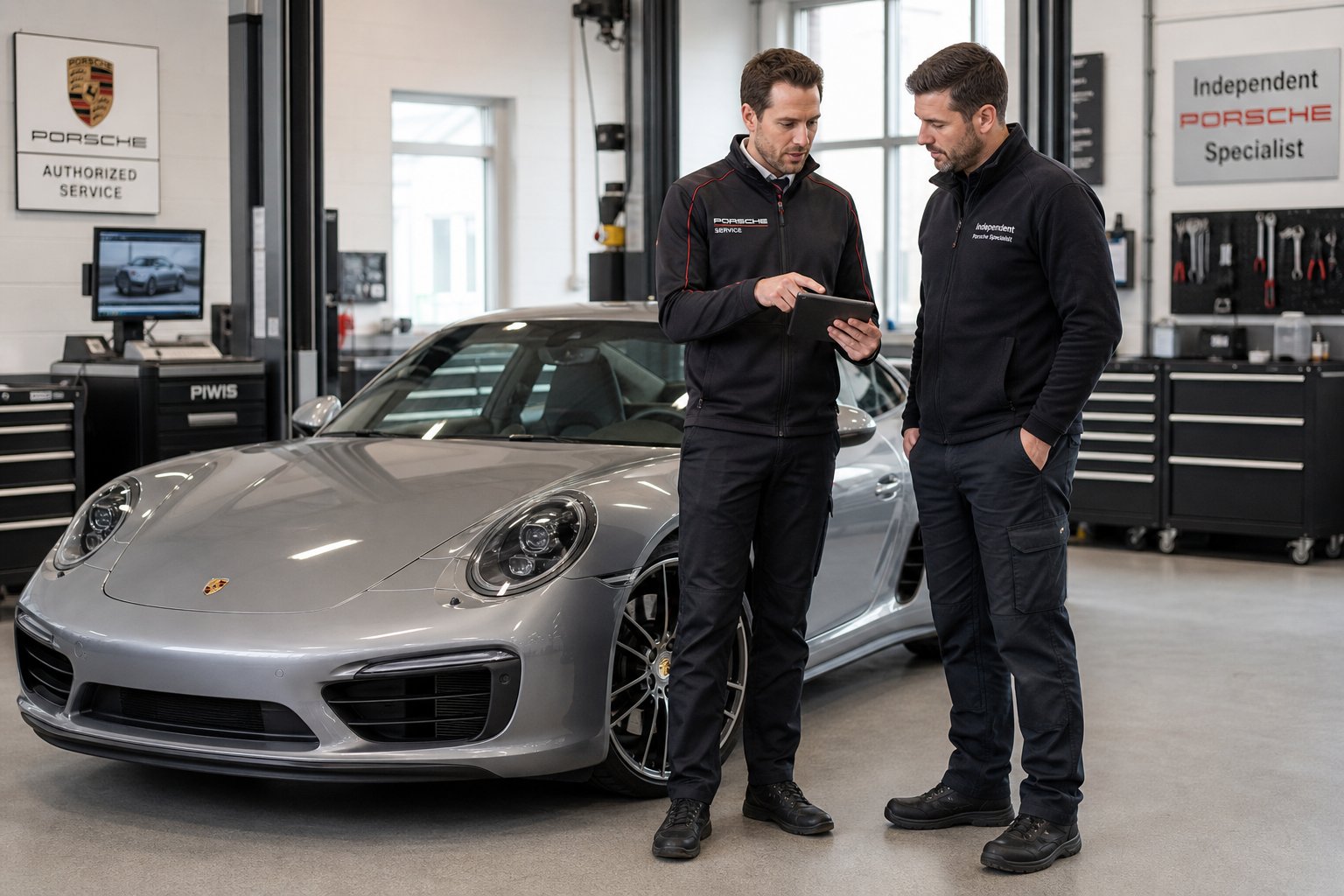
Independent Porsche specialists typically charge 20-30% less than dealerships while offering comparable expertise and equipment. Most independent shops use factory-level diagnostic tools and employ technicians with dealer training.
Benefits of Independent Porsche Service
Independent Porsche specialists often employ technicians who previously worked at dealership service departments. These professionals bring factory training and certification to independent shops, where they typically enjoy better work-life balance. Many independent facilities maintain Porsche gold and silver certifications among their staff.
Independent shops frequently provide more personalized attention to your vehicle. They document service history thoroughly and can offer flexibility that larger dealerships may not provide. Their specialization in Porsche models means they focus exclusively on the brand’s specific requirements rather than servicing multiple manufacturers.
The parts quality at reputable independents matches dealer standards. These shops use genuine OEM parts or OEM-equivalent components that meet Porsche specifications. You should verify that your chosen independent documents all work performed and maintains detailed service records, especially if you plan to sell your vehicle later.
Use of PIWIS Diagnostic Tools
PIWIS (Porsche Integrated Workshop Information System) represents the factory diagnostic platform used by Porsche dealerships. Many established independent specialists invest in PIWIS equipment to provide dealer-level diagnostics. This tool accesses your Porsche’s control modules, performs system tests, and executes software updates.
Access to PIWIS separates qualified Porsche specialists from general repair shops. The system costs tens of thousands of dollars, so its presence indicates a shop’s commitment to proper Porsche service. Not all independents have PIWIS, but those that do can perform nearly all non-warranty procedures that dealerships handle.
Cost Comparisons
Independent Porsche service typically costs 20-30% less than dealership rates for identical work. A major service at a dealer might run $1,200-1,500, while an independent charges $850-1,100 using the same parts and procedures.
Typical Cost Differences:
- Oil changes: Dealer $250-350, Independent $180-250
- Brake service: Dealer $800-1,200, Independent $600-900
- Major service: Dealer $1,200-1,500, Independent $850-1,100
These savings add up over years of ownership. For warranty work or recalls, you must use a dealership. Once your warranty expires, independents offer significant value without sacrificing quality or expertise.
Maintaining Warranty and Protecting Value
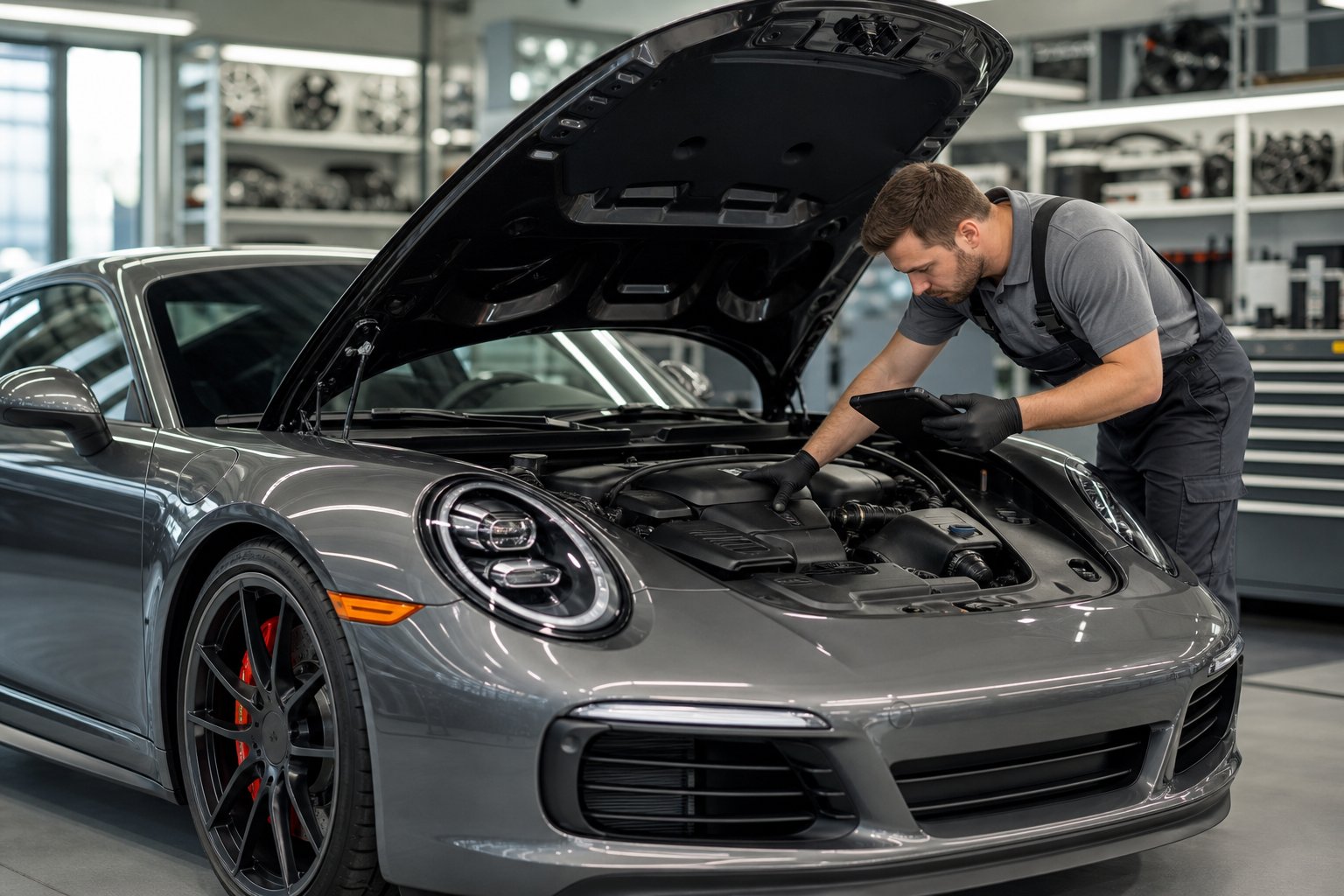
Regular Porsche maintenance directly impacts both your warranty coverage and your vehicle’s resale value. Understanding your legal rights regarding service providers and maintaining thorough documentation helps maximize your investment’s long-term worth.
The Magnuson-Moss Warranty Act
The Magnuson-Moss Warranty Act protects your right to choose where you service your Porsche without automatically voiding your warranty. This federal law prevents manufacturers from requiring you to use only dealership services for warranty coverage, as long as you maintain your vehicle according to the manufacturer’s specifications.
You can have independent mechanics perform your Porsche maintenance using quality parts and still preserve your warranty. The key requirement is following Porsche’s recommended service intervals and procedures. If a warranty claim arises, the manufacturer must prove that improper maintenance directly caused the failure.
Keep detailed records of all services, regardless of where you have the work done. Save receipts showing the service provider, date, mileage, and specific work performed. This documentation becomes your protection if warranty coverage is ever questioned.
Service History and Resale Value
Complete service records significantly increase your Porsche’s resale value. Potential buyers pay premium prices for vehicles with documented maintenance histories showing consistent care at appropriate intervals.
Porsche Genuine parts and factory-trained technicians add credibility to your service history. Dealership stamps in your maintenance book carry weight with serious buyers, though independent specialist documentation also holds value when thorough.
Missing service records create doubt about vehicle condition. Buyers often reduce their offers by thousands of dollars when maintenance history has gaps or appears incomplete. Your consistent documentation of minor services every 10,000 miles and major services every 40,000 miles demonstrates proper ownership and helps command higher asking prices.