When you own a Mercedes-Benz, every repair decision affects your vehicle’s performance, safety, and long-term value. One of the most common dilemmas you’ll face is whether to install OEM parts made to factory specifications or aftermarket alternatives that often cost less. Understanding the differences between these options helps you make informed choices that align with your priorities and budget.
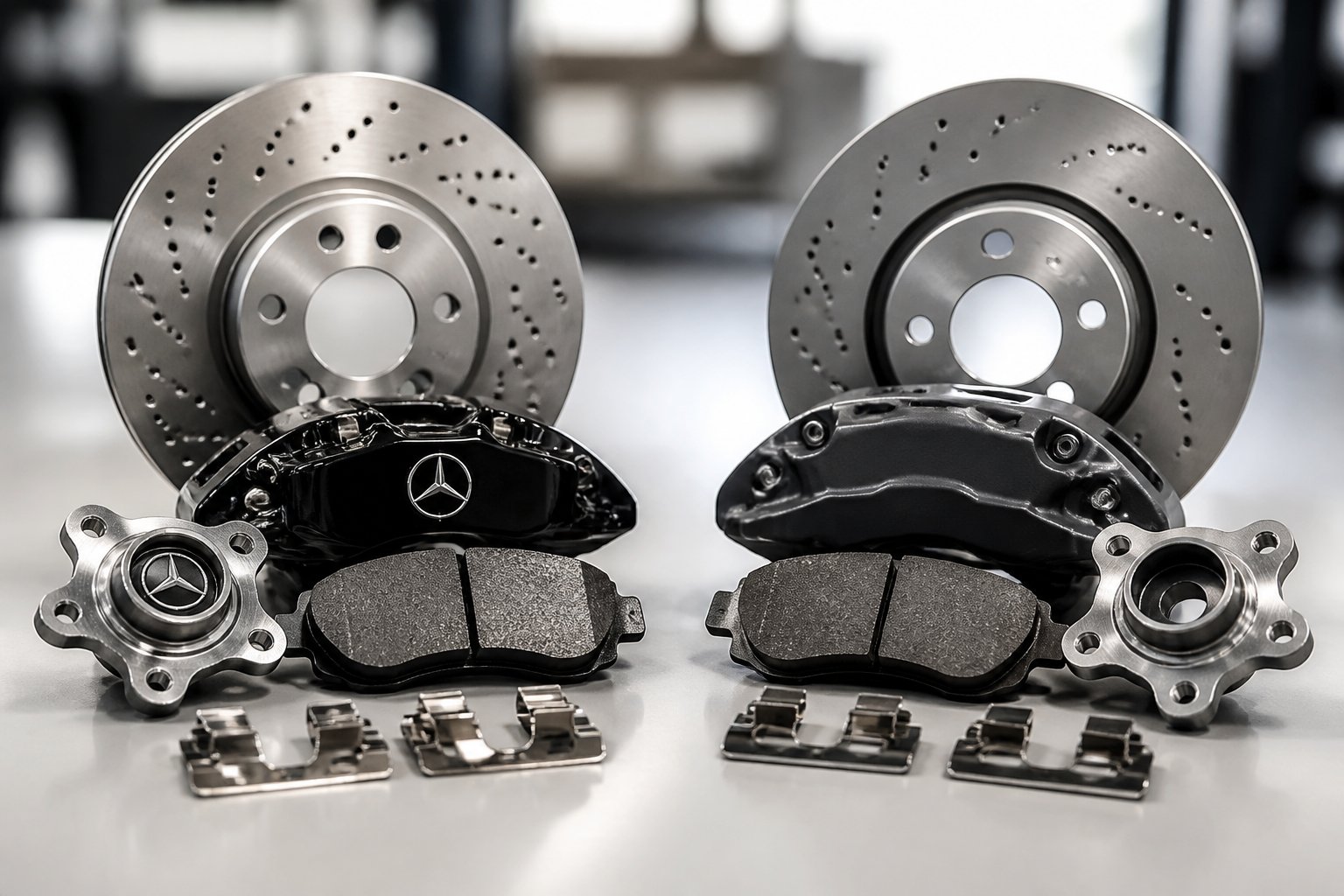
The right choice depends on your specific situation: OEM parts guarantee factory-grade fit and quality with manufacturer backing, while aftermarket parts offer cost savings and variety but with potential trade-offs in compatibility and warranty coverage. Neither option is universally superior in every scenario. Your decision should account for the part type, your vehicle’s age, how long you plan to keep it, and whether warranty protection matters for your circumstances.
This guide breaks down what separates OEM from aftermarket Mercedes parts, how each affects your ownership experience, and which categories warrant closer attention. You’ll learn how to evaluate quality, identify reliable sources, and match your parts choice to your vehicle’s needs without overpaying or compromising on essentials.
Key Differences Between OEM and Aftermarket Mercedes Parts
Understanding the distinctions between OEM, genuine, and aftermarket parts affects your repair costs, vehicle performance, and long-term reliability. Each option offers different levels of quality assurance, compatibility, and pricing structures that impact your Mercedes-Benz ownership experience.
Definition of OEM, Genuine, and Aftermarket Parts
Genuine Mercedes-Benz parts are manufactured by or for Mercedes-Benz and sold through authorized dealerships with the Mercedes-Benz logo and branding. These represent the highest tier of replacement components, identical to what came with your vehicle from the factory.
OEM parts are made by the same manufacturers that supply Mercedes-Benz but sold without the Mercedes-Benz branding. These components meet the same specifications as genuine parts but typically cost 20-40% less because you’re not paying for the brand markup.
Aftermarket parts come from third-party manufacturers who create alternatives to genuine Mercedes-Benz OEM parts. Quality varies significantly between manufacturers, ranging from budget options to premium brands that sometimes exceed OEM specifications. These parts don’t carry Mercedes-Benz approval but must meet industry safety standards.
Fitment, Quality, and Material Considerations
Genuine Mercedes-Benz parts guarantee exact fitment because they’re designed specifically for your vehicle’s VIN and model specifications. Using your VIN lookup ensures you get components that match your car’s production specifications, eliminating fitment issues.
OEM Mercedes parts offer the same precise fitment as genuine parts since they come from identical production lines. The manufacturing tolerances, materials, and engineering remain unchanged from what Mercedes-Benz specifies.
Aftermarket Mercedes parts present variable fitment quality. Premium aftermarket brands invest in reverse engineering and quality control to achieve exact fitment, while budget options may require modifications or accept looser tolerances. Material quality in aftermarket parts ranges from inferior alloys and plastics to upgraded performance materials.
Quality indicators to check:
- Certification marks (ISO, TÜV, SAE)
- Warranty coverage length
- Manufacturing country
- Brand reputation in Mercedes communities
Software and Diagnostic Compatibility
Modern Mercedes-Benz vehicles rely on complex electronic systems that communicate with individual components. Genuine parts contain embedded software and coding that integrates seamlessly with your vehicle’s diagnostic systems.
Aftermarket parts often lack proper software integration, triggering dashboard warnings or preventing features from functioning correctly. Your Mercedes may not recognize aftermarket sensors, control modules, or electronic components without dealer programming.
OEM vs aftermarket differences become most apparent in electronic components like ABS modules, transmission control units, and suspension sensors. Even when physically compatible, aftermarket electronic parts may require additional coding that only Mercedes-Benz diagnostic equipment can perform. Some aftermarket suppliers now offer “plug-and-play” coded parts, but compatibility varies by model year and system.
Cost and Availability Comparisons
| Part Type | Typical Cost | Availability | Warranty Period |
|---|---|---|---|
| Genuine Mercedes-Benz | 100% (baseline) | Dealer network, 1-3 days | 2-4 years |
| OEM Parts | 60-80% of genuine | Online retailers, 2-5 days | 1-3 years |
| Premium Aftermarket | 40-70% of genuine | Widely available, 1-2 days | 1-2 years |
| Budget Aftermarket | 20-50% of genuine | Immediate availability | 90 days – 1 year |
Genuine parts cost the most but include Mercedes-Benz backing and guaranteed compatibility. You’ll find them readily available at dealerships, though some specialized components require ordering.
Aftermarket parts offer significant savings, with common wear items like brake pads and filters costing 50-70% less than genuine alternatives. Availability exceeds genuine parts since multiple suppliers stock popular components. However, rare or model-specific parts may have limited aftermarket options, forcing you toward genuine Mercedes-Benz OEM parts.
How to Choose the Right Parts for Your Mercedes-Benz
Selecting the correct replacement parts requires verifying compatibility with your specific vehicle, sourcing from reliable suppliers, and understanding what protections come with your purchase. These three factors determine whether a part will function properly and remain supported throughout its service life.
Assessing Fitment and Vehicle Compatibility
Mercedes-Benz produces multiple variants of the same model year with different engine configurations, transmission types, and equipment packages. A brake rotor for a C300 with the sport package differs from one designed for the base model, even within the same year.
Your vehicle identification number contains the specific build data needed to identify exact fitment. The VIN reveals your production date, factory options, and regional specifications that affect part compatibility.
Critical compatibility factors include:
- Engine code and displacement
- Transmission type (automatic vs manual, gear count)
- Drive configuration (RWD, AWD, 4MATIC)
- Trim level and factory packages
- Production date and running changes
Part numbers serve as the most reliable verification method. Genuine Mercedes-Benz parts carry specific part numbers that correspond to your vehicle’s build sheet. Comparing the part number from your existing component against the replacement ensures you receive an identical specification.
Aftermarket manufacturers sometimes list broad compatibility ranges that don’t account for mid-year changes or specific equipment variations. Cross-reference multiple sources before purchasing.
Role of Authorized Distributors and VIN Lookup
Authorized distributors maintain direct connections to Mercedes-Benz supply chains and access current part supersession data. When a part number becomes obsolete or receives an engineering update, authorized suppliers can identify the correct replacement.
A VIN lookup through an authorized distributor reveals your vehicle’s complete parts catalog. This database shows every component installed at the factory, including options that may not appear in generic catalogs.
Benefits of VIN-based ordering:
| Aspect | Advantage |
|---|---|
| Part accuracy | Matches factory specifications exactly |
| Updated supersessions | Receives latest part number revisions |
| Recall identification | Flags affected components |
| Build-specific options | Identifies equipment variations |
Third-party retailers may lack access to updated technical service bulletins that affect part selection. Authorized distributors receive manufacturer communications about revised parts, improved designs, and compatibility issues discovered after production.
Warranty, Support, and Long-Term Reliability Considerations
Mercedes-Benz OEM parts typically include a 24-month unlimited mileage warranty when installed at authorized service centers. This coverage protects against manufacturing defects and premature failure.
Extended warranty policies often require genuine Mercedes-Benz parts to maintain coverage. Using non-approved components can void specific warranty provisions, leaving you responsible for related repair costs.
Aftermarket parts carry varying warranty terms from 90 days to lifetime coverage, but warranty enforcement depends on the manufacturer remaining in business. A lifetime warranty provides no value if the company dissolves or stops supporting that product line.
Support considerations include:
- Technical assistance for installation questions
- Return policies for incorrect or defective parts
- Access to updated installation procedures
- Availability of replacement parts years later
Genuine parts remain available through the Mercedes-Benz network for 10-15 years after production ends. Aftermarket availability depends on market demand, and less common components may become discontinued sooner.
Documentation matters for resale value. Service records showing genuine parts installation demonstrate proper maintenance to potential buyers and can increase your vehicle’s resale price by 3-8% compared to vehicles with undocumented repairs.
Impacts on Performance, Safety, and Ownership Costs
The parts you select directly affect how your Mercedes operates, what risks you accept, and how much the vehicle will be worth later. Budget aftermarket parts introduce compatibility problems with electronic systems, while questionable manufacturing standards can compromise crash safety and braking performance.
Integration with Advanced Mercedes Systems
Modern Mercedes-Benz vehicles rely on integrated electronic architecture where individual components communicate with central control units. Aftermarket parts often lack the precise coding and calibration needed for systems like DAS (Driver Assistance Systems), which monitors everything from adaptive cruise control to collision prevention.
Common integration issues include:
- Incorrect sensor resistance values triggering fault codes
- ABS modules rejecting non-OEM wheel speed sensors
- Suspension components causing ride height errors in AIRMATIC systems
- Transmission parts failing to communicate proper shift data
Mercedes-Benz parts include software parameters programmed to work within exact tolerances. When aftermarket Mercedes parts bypass these specifications, the vehicle’s diagnostic system may enter limp mode or disable safety features entirely. Your electronic stability program might deactivate if it cannot verify brake component authenticity.
Third-party manufacturers rarely update their products when Mercedes releases software patches. This creates a growing gap between what your vehicle expects and what the aftermarket part delivers.
Risks of Inferior or Budget Aftermarket Parts
Budget aftermarket options frequently use lower-grade materials and less stringent quality control. Steel alloys in suspension arms may have reduced tensile strength, while brake rotors might contain excessive impurities that accelerate wear and reduce stopping power.
Documented failures include premature bushing deterioration, brake pad delamination, and engine mount collapse. These aren’t hypothetical scenarios but measurable outcomes from parts lacking proper heat treatment or dimensional accuracy. Counterfeit parts labeled as premium aftermarket have appeared in supply chains, some containing hazardous materials banned in genuine manufacturing.
Safety becomes a direct concern with structural components. A substandard control arm can fracture under normal driving loads. Brake components that don’t meet Mercedes specifications increase stopping distances by several feet, which matters during emergency braking.
Effect on Resale Value and Manufacturer Warranty
Installing aftermarket parts can void portions of your manufacturer warranty if those parts cause related failures. Mercedes-Benz dealers document non-genuine parts during service visits, which creates a permanent service history record that follows the vehicle.
Certified Pre-Owned programs typically exclude vehicles with significant aftermarket modifications. Private buyers and dealerships both discount vehicles when they discover non-original components, particularly in critical systems like braking, steering, and powertrain.
An extended warranty provider may deny claims if aftermarket parts contributed to a failure, even indirectly. The burden of proof often falls on you to demonstrate that your chosen parts didn’t cause the problem. This documentation requirement becomes expensive when it involves independent mechanical analysis.
Resale value drops more significantly for luxury brands than mass-market vehicles. Mercedes buyers expect original specifications, and deviations from OEM vs aftermarket standards reduce perceived quality and reliability.
Popular Parts Categories and Expert Recommendations
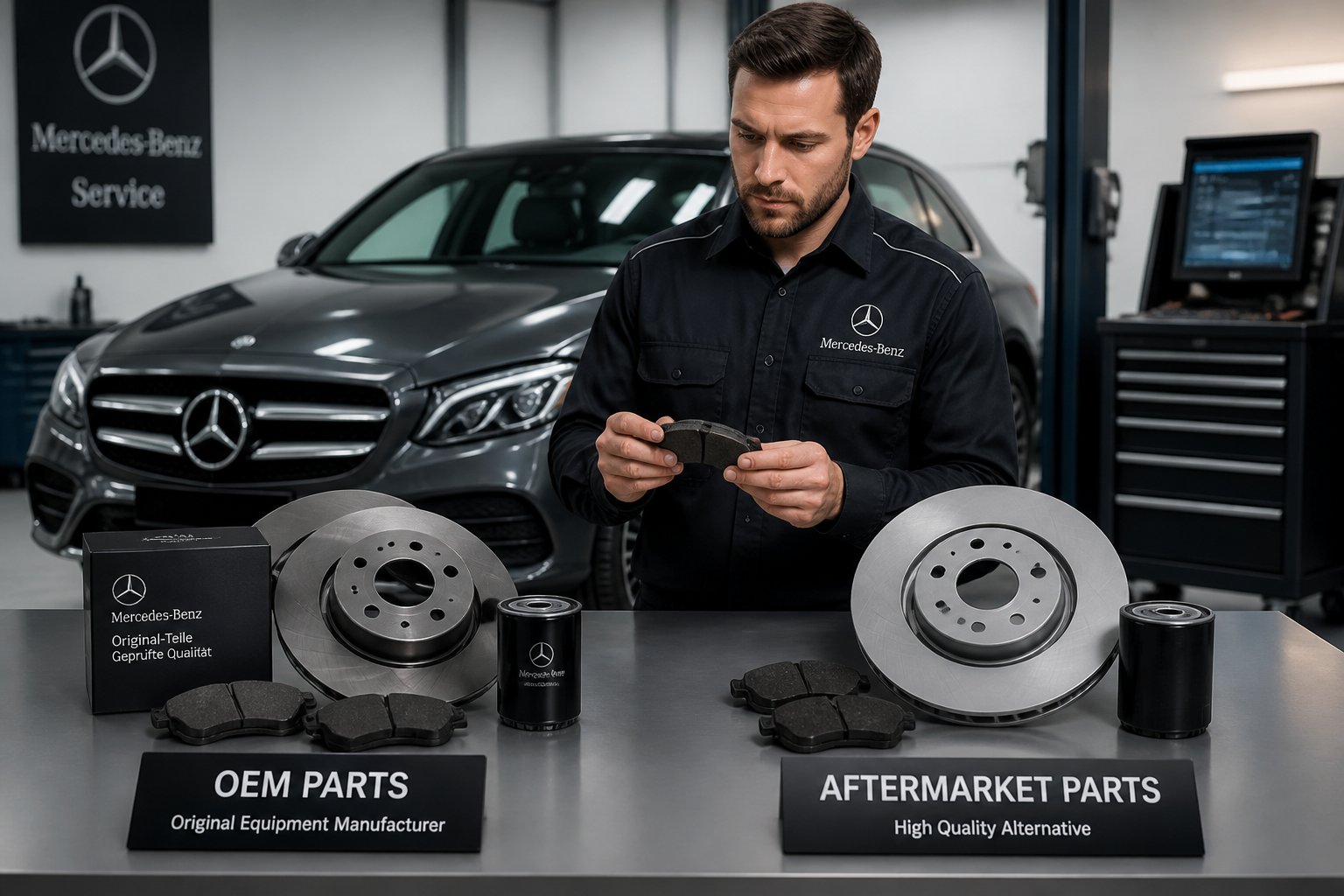
Different Mercedes parts require different sourcing strategies based on their role in vehicle safety, performance, and comfort. Critical systems benefit most from OEM quality, while routine maintenance items and accessories offer more flexibility.
Engine, Braking, and Electronic Components
You should prioritize OEM parts for engine and braking systems on your Mercedes. These components directly affect safety and performance, making quality non-negotiable.
Engine components like timing chains, fuel injectors, and turbochargers require precise engineering tolerances. Aftermarket versions may fit initially but can cause long-term damage or reduced performance in models like the GLE 450.
Braking systems demand OEM or premium aftermarket brands only. Your brake pads, rotors, and calipers must meet exact specifications to maintain stopping power and ABS functionality. Mercedes engineers design these systems as integrated units, and substandard parts compromise safety.
Electronic components present the highest risk with aftermarket alternatives. Sensors, control modules, and wiring harnesses often fail to communicate properly with your vehicle’s computer systems. This leads to warning lights, reduced functionality, and expensive diagnostic work.
Recommended approach:
- Engine internals: OEM only
- Brake components: OEM or Continental (trusted OEM supplier)
- Electronic sensors: OEM preferred
- Turbochargers: OEM mandatory
Cabin Air Filters and Routine Maintenance Items
Cabin air filters and similar maintenance items offer the best opportunity to use quality aftermarket parts. You can achieve significant savings without compromising your vehicle.
Your cabin air filter requires replacement every 15,000-20,000 miles. Aftermarket options from reputable manufacturers cost 40-60% less than OEM while providing equivalent filtration. Look for activated charcoal variants that match OEM specifications.
Oil filters, air filters, and wiper blades fall into this category as well. These parts wear predictably and don’t require the precision of safety-critical components. Quality aftermarket brands deliver comparable performance at lower prices.
Cost comparison for routine items:
| Part | OEM Price | Aftermarket Price |
|---|---|---|
| Cabin air filter | $45-65 | $20-30 |
| Engine air filter | $40-55 | $15-25 |
| Oil filter | $12-18 | $8-12 |
Mercedes-Benz Accessories and Performance Upgrades
Mercedes-Benz accessories and performance upgrades depend entirely on your priorities and warranty status. Genuine accessories maintain warranty coverage and guaranteed fitment.
Factory accessories like roof racks, all-weather floor mats, and cargo organizers integrate seamlessly with your vehicle. You pay a premium, but installation is straightforward and quality is assured.
Performance upgrades require careful consideration. Aftermarket exhaust systems, suspension components, and tuning modules can void your warranty. If your vehicle is under warranty, stick with approved Mercedes-Benz performance parts.
Aftermarket wheels and tires offer substantial variety and cost savings. Ensure any wheels match your load rating, offset, and bolt pattern specifications. Tire choices should meet or exceed your original equipment speed and load ratings.
Key considerations:
- Warranty status determines accessory choices
- Performance modifications require professional installation
- Cosmetic accessories have more aftermarket flexibility