Buying used Porsche parts can save you significant money on maintenance and repairs, but only if you know what to look for. Before purchasing any used Porsche component, you need to verify the exact part number for your vehicle’s year and model, confirm the part’s condition through inspection or documentation, and ensure it comes from a reputable source with some form of guarantee. Without this knowledge, you risk buying incompatible parts or components that fail prematurely.
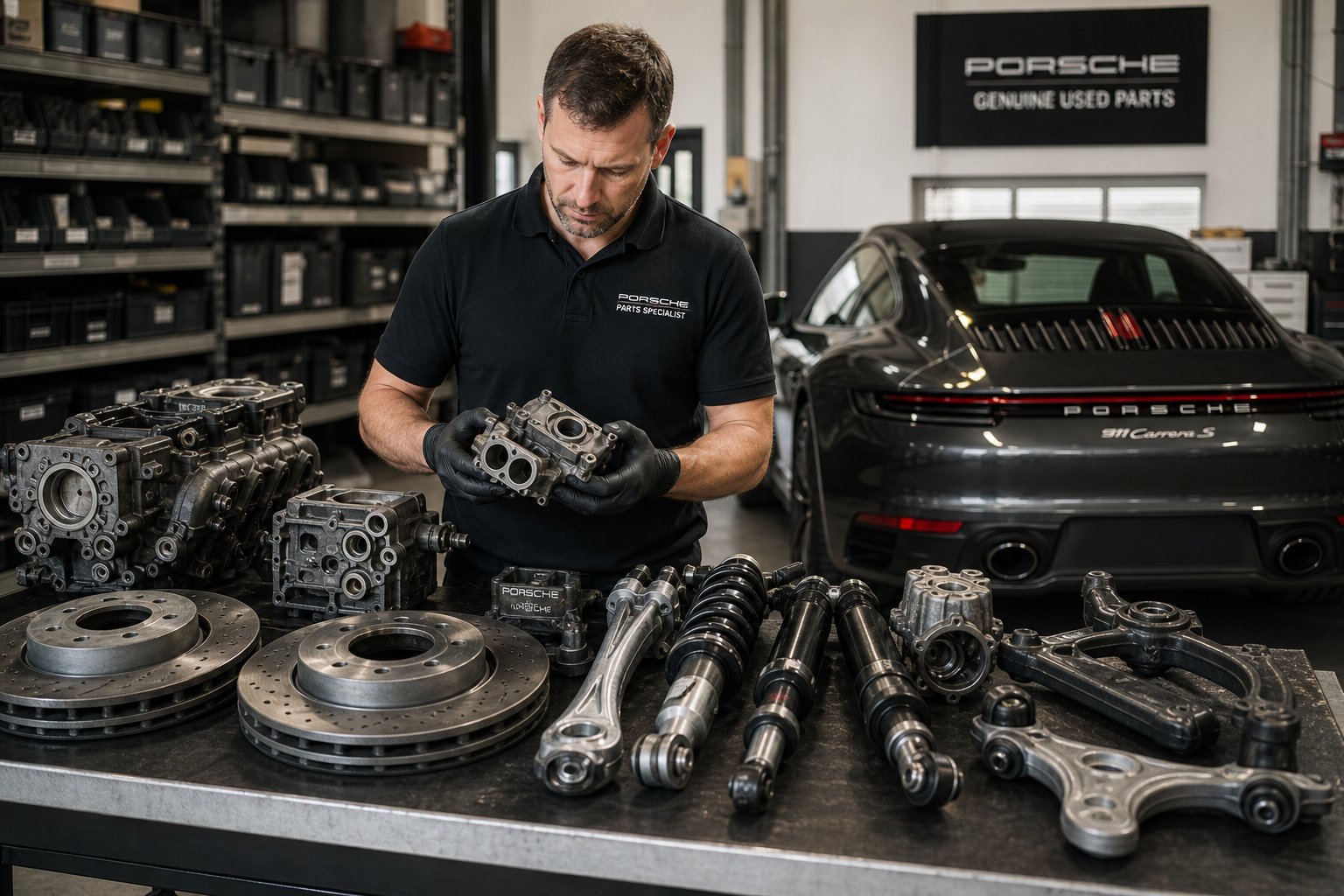
The complexity of Porsche engineering means that even minor variations between model years can affect fitment and performance. You’ll need to understand your vehicle’s specifications, including engine type, transmission, and body style, before searching for replacement parts. These details determine which components will work correctly with your specific Porsche.
Making informed decisions about used parts requires understanding quality differences, knowing where to find reliable suppliers, and recognizing when aftermarket or OEM alternatives might serve you better. This guide covers everything from evaluating part condition to choosing between different types of replacement components, helping you avoid costly mistakes while maintaining your Porsche’s performance.
Types of Porsche Parts and How They Differ
Porsche replacement parts fall into four main categories, each with distinct manufacturing origins, quality standards, and price points. Understanding these differences helps you make informed decisions about cost versus quality for your specific repair needs.
Genuine Porsche Parts Explained
Genuine Porsche parts are components sold directly through Porsche’s official distribution network and branded with the Porsche logo. These parts come with manufacturer warranties and meet exact factory specifications for your specific model.
The main advantage is guaranteed compatibility and quality control. When you purchase genuine parts from an authorized Porsche dealer, you receive components that match your vehicle’s original build specifications precisely.
The primary drawback is cost. Genuine Porsche parts typically carry premium pricing, often 30-50% higher than alternatives. For critical systems like brakes, suspension, or engine components, this investment may be worthwhile.
These parts are ideal for warranty repairs, high-performance models, or when maintaining maximum resale value matters to you.
OEM and OE Parts: Pros and Cons
OEM (Original Equipment Manufacturer) parts are manufactured by the same suppliers that produce components for Porsche’s factory assembly line. Porsche doesn’t manufacture most components in-house but contracts with thousands of suppliers. These parts are identical to genuine parts but lack Porsche branding and official packaging.
Key advantages:
- Same quality as genuine parts
- Lower pricing (typically 15-30% less)
- Direct factory specifications
- Compatible with your specific model year
Notable limitations:
- May not include Porsche warranty
- Harder to verify authenticity
- Limited availability through non-dealer channels
OE (Original Equipment) parts represent another tier in this category, often meeting the same manufacturing standards without the premium markup you pay at dealerships.
Aftermarket Parts Insights
Aftermarket parts are manufactured by third-party companies not affiliated with Porsche or its original suppliers. The aftermarket industry spans from budget options to premium performance upgrades that can exceed OEM specifications.
Quality varies significantly across manufacturers. Some aftermarket companies design parts to address known weaknesses in original components or enhance performance beyond factory specifications. Others produce basic replacements at minimal cost with shorter lifespans.
Price represents the primary advantage, with savings of 40-70% compared to genuine parts. Performance-focused brands sometimes offer superior materials or engineering for specific applications like brake pads, exhaust systems, or suspension components.
The risks include inconsistent fitment, shorter durability, and potential compatibility issues. Not all aftermarket parts come with warranties, and some may void existing coverage on related components.
Used and Reconditioned Components
Used Porsche parts come from salvaged vehicles, part-outs, or previous repairs. Reconditioned parts are used components that have been cleaned, tested, and restored to functional condition.
These options make sense for discontinued parts, body panels, interior trim, or non-critical mechanical components. Prices range from 50-80% below new genuine parts, making them attractive for older models or budget-conscious repairs.
You must verify the part’s condition, mileage history, and compatibility with your specific model year. Request photos showing part numbers and physical condition. Understand the seller’s return policy before purchasing.
Avoid used parts for safety-critical systems like airbags, seatbelts, or ABS components. Reconditioned alternators, starters, and similar electrical components from reputable rebuilders often provide reliable service at substantial savings.
Evaluating Used Porsche Parts for Quality and Fitment
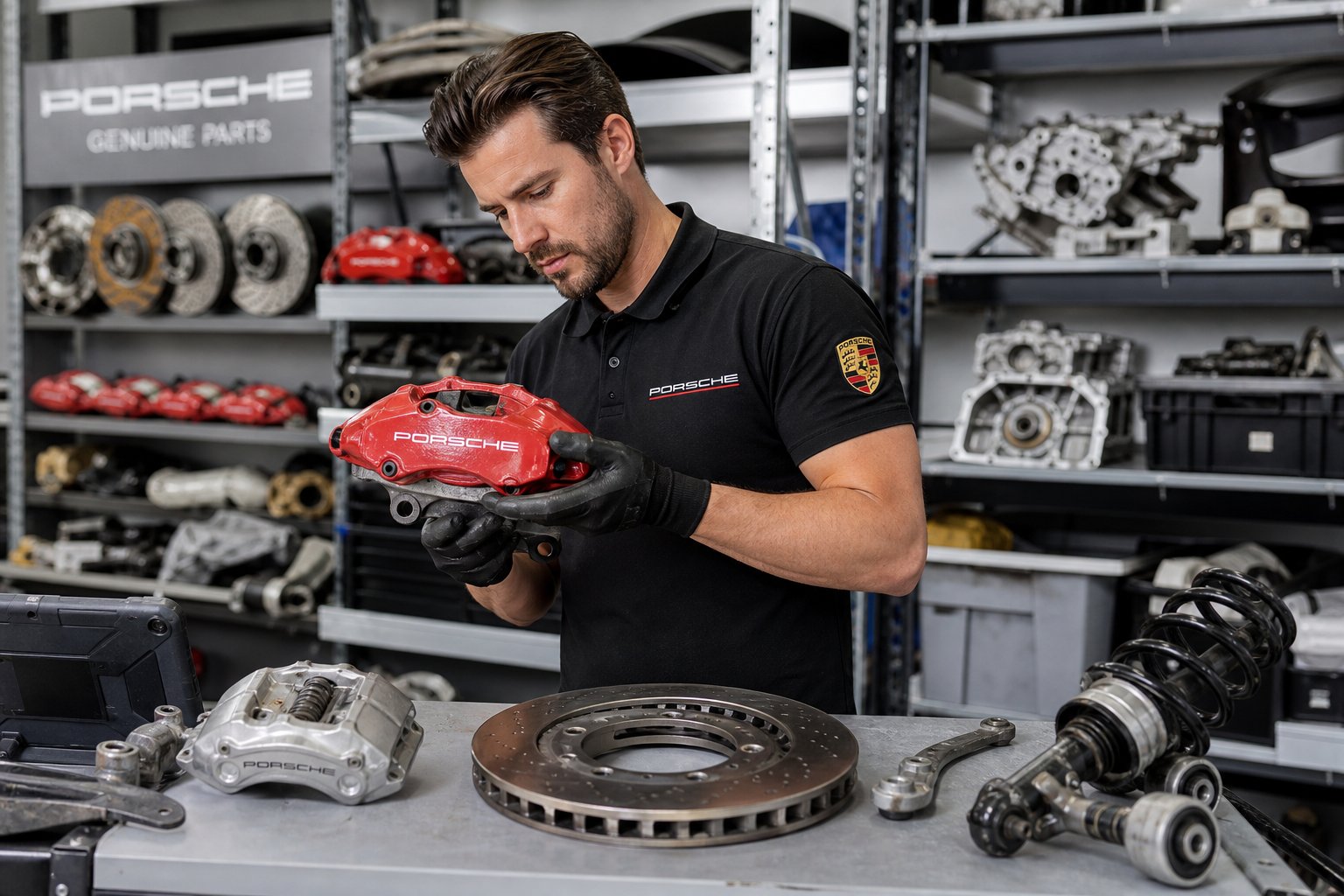
Quality used Porsche parts can save you significant money, but only if they’re authentic, properly documented, and suited to your specific model. You need to verify part numbers, assess seller credibility, and understand the actual condition of components before committing to a purchase.
Verifying Authenticity and Part Numbers
Every genuine Porsche part carries a unique part number that corresponds to specific model years and configurations. You should cross-reference the part number on the component with Porsche’s official parts catalog or your vehicle’s documentation to confirm compatibility. This step is particularly important for critical components like the IMS bearing, where using an incorrect or counterfeit part can lead to catastrophic engine failure.
Check for Porsche stampings, logos, or manufacturer markings on the part itself. Genuine Porsche parts typically display clear branding and production codes. If you’re buying online, request multiple high-resolution photos showing all identification marks and numbers.
Compare the physical characteristics of the used part against known specifications. Counterfeit parts often have subtle differences in finish, weight, or casting details. When possible, consult with Porsche specialists or online forums where experienced owners can help identify authentic components from replicas.
Checking Seller Reputation and Documentation
A reputable seller provides clear documentation about the part’s origin, mileage, and removal reason. You should ask for service records or proof that the part came from a legitimate source rather than a salvage vehicle with unknown history.
Review seller ratings and feedback from previous buyers. Online marketplaces often display transaction histories that reveal patterns of customer satisfaction or complaints. Pay attention to how the seller responds to questions and concerns.
Request a return policy in writing before purchasing. Legitimate parts dealers typically offer some form of guarantee or return window, while sellers of questionable parts often have strict no-return policies. You should also verify the seller’s physical location and contact information to ensure accountability if issues arise.
Assessing Wear and Warranty Options
Physical inspection reveals the true condition of used Porsche parts. Look for signs of excessive wear, including scoring, cracks, discoloration from heat stress, or corrosion. Mechanical components should show even wear patterns without irregularities that suggest improper installation or operation.
Test functionality when possible before installation. Electrical components should be bench-tested, and moving parts should operate smoothly without binding or unusual resistance. For replacement Porsche parts like suspension components, check bushings and mounting points for deterioration.
Some used parts dealers offer limited warranties on their inventory. While these warranties are typically shorter than those for new parts, they provide valuable protection against immediate failure. You should clarify what the warranty covers, its duration, and the process for making claims before finalizing your purchase.
Where to Source Reliable Porsche Parts
Quality suppliers range from authorized dealerships with guaranteed compatibility to specialized online retailers and community-driven marketplaces where enthusiasts buy, sell, and verify parts directly. Each channel offers distinct advantages in pricing, authenticity verification, and access to rare components.
Porsche Dealers and Certified Specialists
Authorized Porsche dealers provide OEM parts with full warranty coverage and guaranteed fitment for your specific model year. These suppliers maintain direct relationships with the manufacturer and can trace part numbers to ensure exact compatibility.
Certified Porsche specialists operate independently but focus exclusively on the brand. They typically stock both new OEM components and quality used parts pulled from donor vehicles. These shops employ technicians trained specifically on Porsche systems, which means they can verify whether a used part meets the brand’s tolerances.
Expect to pay premium prices at dealerships, but you gain peace of mind through authenticity guarantees and return policies. Specialists often offer a middle ground—lower prices than dealers while maintaining higher standards than general salvage yards.
Online Retailers and Enthusiast Marketplaces
Pelican Parts has built a reputation as a comprehensive online source for both new and used Porsche components, offering detailed fitment guides and technical resources. The platform caters specifically to Porsche owners and provides compatibility verification tools.
Specialized European auto parts retailers focus on multiple luxury brands including Porsche, often photographing actual components so you can inspect condition before purchase. These vendors typically grade parts by condition and provide return windows if fitment issues arise.
General marketplaces require more caution since sellers may lack Porsche-specific knowledge. Always verify part numbers against your VIN, request detailed photos showing casting marks and date codes, and confirm the seller’s return policy before purchasing.
Forums and Community Networks
Rennlist serves as the largest online Porsche community, featuring classified sections where owners sell parts directly to other enthusiasts. Members often provide detailed histories of components and can answer technical questions about specific applications.
Community forums allow you to tap into collective expertise before purchasing. Experienced owners frequently identify which production years had problematic parts or which components interchange across models.
These networks also connect you with members parting out vehicles, giving access to complete assemblies at lower prices than individual components. Reputation systems within forums help identify trustworthy sellers, though you assume more risk than purchasing from established retailers.
Key Considerations When Buying a Pre-Owned Porsche
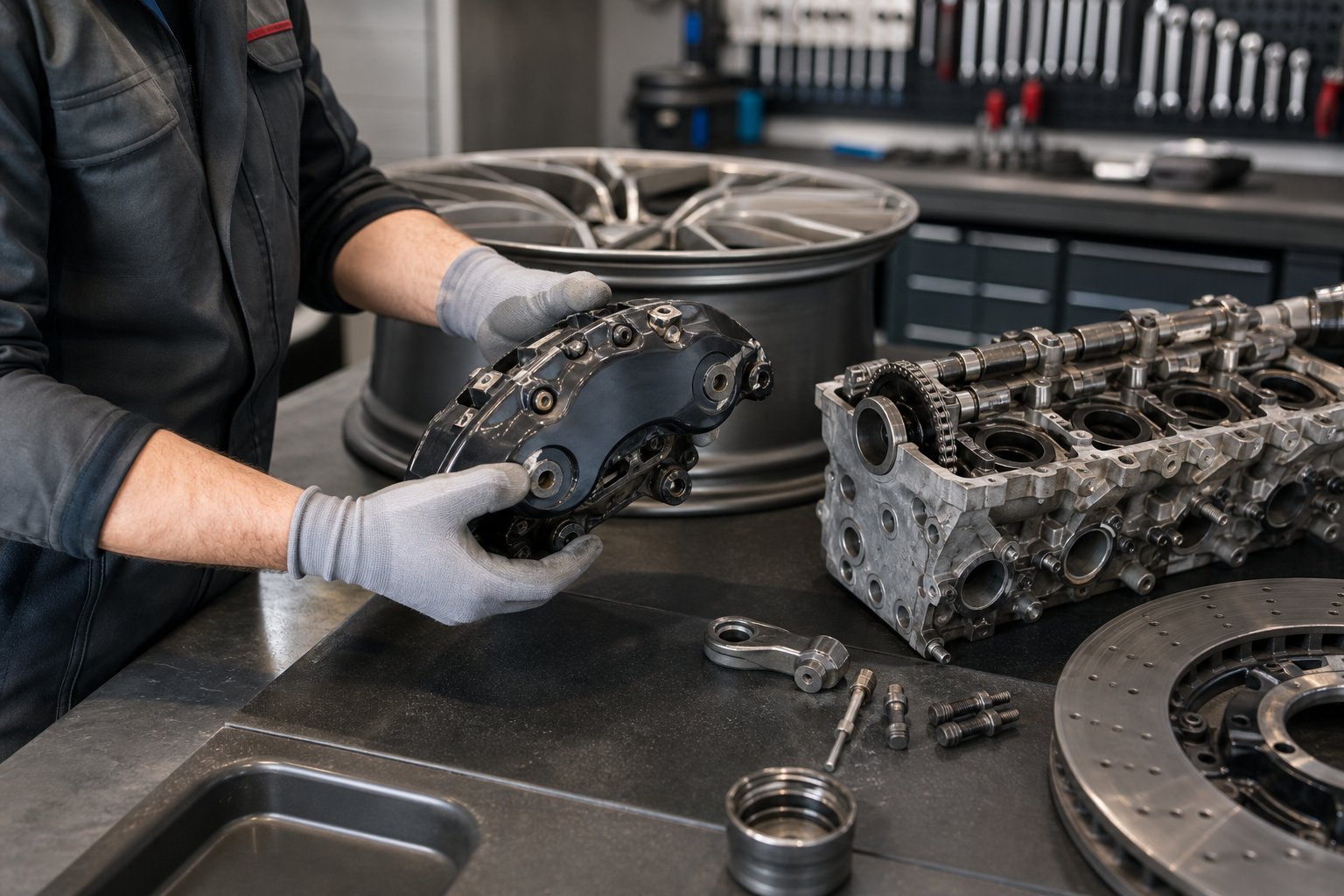
Buying a used Porsche requires careful attention to inspection protocols, model-specific mechanical vulnerabilities, and realistic budgeting for ongoing maintenance. These three factors separate a rewarding ownership experience from an expensive mistake.
Pre-Purchase Inspection (PPI) Importance
A pre-purchase inspection performed by an independent Porsche specialist is non-negotiable when buying a used Porsche. You should never rely on the seller’s mechanic or skip this step based on clean photos or a trustworthy-seeming owner.
The inspection should cover engine compression, transmission function, suspension wear, and fluid conditions. A qualified Porsche technician will identify deferred maintenance, hidden collision damage, and potential failure points that aren’t visible during a test drive.
You’ll pay between $200 and $500 for a thorough PPI, but this investment can save you thousands in surprise repairs. The inspection report gives you negotiating leverage or, in some cases, the information you need to walk away from a problematic car.
Choose a shop that specializes in Porsche vehicles and has no connection to the seller. Generic mechanics often miss brand-specific issues that experienced Porsche technicians spot immediately.
Model-Specific Issues to Watch For
Different Porsche models carry distinct mechanical concerns that you must understand before purchase. The 996 and early 997.1 generations (2005-2008) have IMS bearing failures that can destroy the engine without warning, making inspection of this component critical.
Water-cooled 911s may develop cylinder scoring, particularly in models from 1998 to 2005. Bore scoring appears as vertical scratches in cylinder walls and eventually causes catastrophic engine failure.
Cayenne models from 2003 to 2010 experience coolant pipe failures that can crack engine blocks if not addressed. Boxster and Cayman models share many 911 issues but add mid-engine cooling challenges and potential top mechanism problems in convertible variants.
Research your target model’s known issues before viewing cars. This knowledge helps you ask informed questions and spot red flags during the PPI.
Ownership and Maintenance Costs
Pre-owned Porsche ownership costs extend well beyond the purchase price. You should budget $2,000 to $5,000 annually for routine maintenance, depending on model and age.
Major services occur every 20,000 to 30,000 miles and include fluid changes, spark plugs, and system inspections. Brake jobs on performance models often exceed $1,500 due to specialized rotors and pads. Tire replacement for 911s can cost $1,200 to $2,000 for a quality set.
Parts availability is generally good, but genuine Porsche components carry premium pricing. Independent specialists charge 30-50% less than dealers for labor while maintaining quality standards.
Plan for unexpected repairs by setting aside a reserve fund. A transmission rebuild runs $5,000 to $8,000, while engine work can easily exceed $15,000 if major components fail.
Choosing Between Genuine, OEM, and Aftermarket Solutions
The parts market for Porsches includes three distinct categories, each with different manufacturing origins, quality standards, and price points. Understanding these differences helps you make decisions that align with your vehicle’s needs and your maintenance goals.
Performance and Longevity Factors
Genuine Porsche parts come directly from the manufacturer and meet the exact specifications used in original production. These parts typically offer the most predictable performance because they’re designed specifically for your model and year.
OEM parts are manufactured by the same suppliers who make genuine Porsche parts but are sold without Porsche branding. They maintain the same engineering standards and often come from identical production lines. The performance gap between genuine and OEM parts is usually negligible for most applications.
Aftermarket parts vary significantly in quality depending on the manufacturer. Premium aftermarket brands can match or exceed OEM specifications, particularly for performance upgrades. Budget aftermarket options may use different materials or tolerances that affect fitment and durability.
When buying used Porsche parts, you’re often getting genuine or OEM components at reduced prices. The longevity depends entirely on the part’s condition, usage history, and remaining service life.
Budget and Availability
Price comparison for common replacement Porsche parts:
| Part Type | Typical Cost Range | Lead Time |
|---|---|---|
| Genuine | Highest (baseline) | 1-5 days |
| OEM | 20-40% less | 2-7 days |
| Aftermarket | 30-60% less | 1-3 days |
| Used | 40-80% less | Variable |
Genuine Porsche parts command premium prices because of branding and dealer network markup. OEM parts offer cost savings without sacrificing quality for routine maintenance items like filters, brake components, and sensors.
Aftermarket parts provide the widest price range. High-performance aftermarket options often cost more than genuine parts, while budget alternatives significantly undercut OEM pricing. Availability tends to be better for aftermarket parts, especially for older models where genuine inventory may be limited.
Used parts present the most variable pricing based on condition, rarity, and seller motivation.
Safety and Warranty Implications
Critical safety components like brake calipers, suspension arms, and airbag systems require parts that meet strict safety standards. Genuine and quality OEM parts carry certifications that ensure compliance with these requirements.
Using non-genuine parts can void your warranty on newer Porsches if the dealer determines the part caused a failure. Most warranties allow aftermarket parts only if they meet or exceed OEM specifications. Document all parts purchases and installations to protect warranty coverage.
Aftermarket parts from reputable manufacturers often include their own warranties, though coverage terms vary. Used Porsche parts typically have no warranty unless purchased from specialized dealers who offer limited guarantees. Inspect certification marks and quality standards documentation before installing any safety-related component.
Tips for Making Smart Porsche Parts Purchases
Successful used Porsche parts purchases depend on verification steps that protect you from compatibility issues and unreliable sellers. Checking specific vehicle information, understanding seller policies, and tapping into experienced Porsche communities can prevent costly mistakes.
VIN and Compatibility Checks
Your Porsche’s VIN (Vehicle Identification Number) contains critical information about your specific model year, engine type, transmission, and factory options. Use this 17-character code to verify that any used part matches your exact configuration, as Porsche made running changes throughout production years that affect part compatibility.
Beyond the VIN, you need to confirm the part number directly. Genuine Porsche parts have specific part numbers stamped or labeled on them. Cross-reference these numbers with your Porsche’s parts catalog or ask a Porsche specialist to verify the match before purchasing.
Pay attention to model-specific variations. A part from a 997.1 may not fit a 997.2, even though both are 911s from similar years. Engine codes, production dates, and optional equipment packages all influence which parts will work with your vehicle.
Reading Terms and Return Policies
Return policies for used parts vary dramatically between sellers. Some offer no returns on used parts whatsoever, while others provide 30-day guarantees. Read the exact conditions under which you can return a part—many sellers only accept returns for incorrect parts, not for changed minds or fitment issues you discover later.
Warranties on used Porsche parts typically range from none to 90 days. Understand what the warranty covers: some only protect against DOA (dead on arrival) items, while others cover failure during normal use. Get warranty terms in writing before completing your purchase.
Check the seller’s inspection process and grading system. Reputable sellers describe part condition accurately using terms like “tested,” “untested,” or “sold as-is.” Photos should show all angles, including any damage or wear.
Leveraging Porsche Community Resources
Rennlist and other Porsche forums contain decades of knowledge from owners who have already navigated parts purchases for your specific model. Search for threads about the exact part you need—members often share which sellers are reliable and which parts commonly fail or cause problems.
Forum members can help you identify whether a used part is worth buying or if you should invest in new. They frequently post part number cross-references and compatibility charts that aren’t readily available elsewhere.
Connect with Porsche specialists through these communities. Many independent shops and specialists participate in forums and can verify part numbers, suggest alternatives, or warn you about common counterfeit parts in circulation.