Your car’s braking system is one of the most important safety features on your vehicle. If you want better stopping power, reduced brake fade, or improved performance during spirited driving, upgrading to a performance brake kit makes sense. The question is which one will work best for your specific needs and driving style.
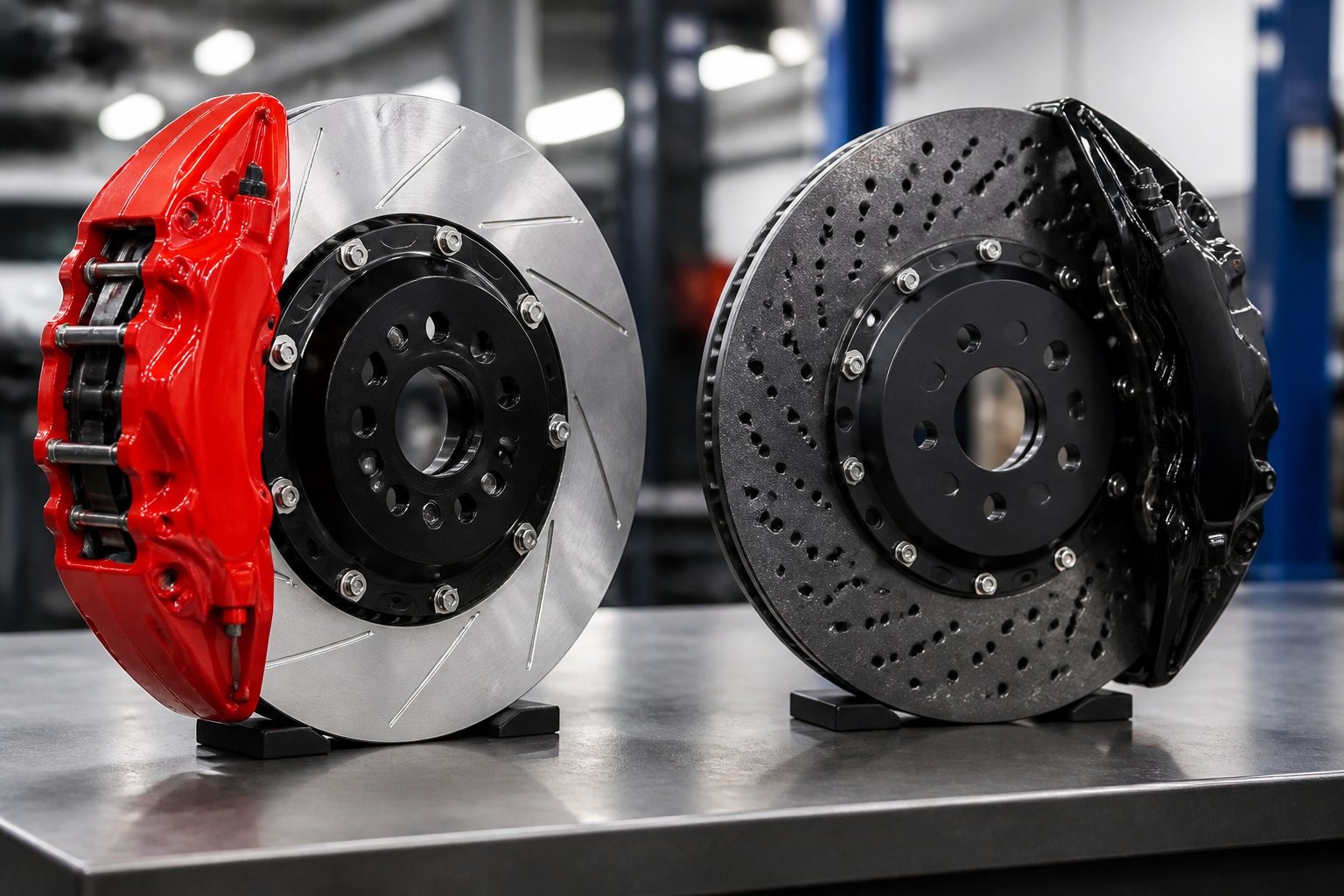
The right performance brake kit depends on how you use your vehicle—street driving requires different components than track use, and matching brake pad compounds, rotor designs, and caliper sizes to your driving conditions will give you the best results. A complete kit with matched components works better than buying parts separately because everything is designed to function together. This reduces problems like uneven wear, noise, and inconsistent braking.
Choosing a brake kit involves understanding what parts matter most and how they affect performance. From brake pad materials to rotor types and supporting components like fluid and lines, each element plays a role in how your brakes perform. This guide will help you sort through the options and pick the right upgrade for your car.
Key Takeaways
- Match your brake kit components to your driving style, whether that’s daily street use or aggressive track driving
- Complete brake kits with matched parts deliver better performance than buying individual components separately
- Brake pad compounds, rotor designs, and quality fluid all work together to determine your overall stopping power
Key Factors Affecting Brake Performance
Your brake system’s effectiveness depends on three critical performance areas: how quickly you can stop, how the brakes respond to your input, and how well they handle heat during demanding use. Understanding these factors helps you select components that match your driving needs.
Stopping Power and Shorter Stopping Distances
Stopping power determines how quickly your vehicle comes to a complete halt when you press the brake pedal. This capability directly affects your safety in emergency situations and your confidence during spirited driving.
The size of your brake rotors plays a major role in stopping power. Larger rotors provide more leverage and surface area for your brake pads to grip. A jump from 12-inch to 14-inch rotors can reduce your stopping distances by several feet at highway speeds.
Your caliper design matters too. Multi-piston calipers distribute clamping force more evenly across the pad surface compared to single-piston designs. A 4-piston or 6-piston caliper applies consistent pressure, which translates to shorter stopping distances and better control.
The friction material in your brake pads creates the actual stopping force. Semi-metallic pads offer strong bite and durability, while ceramic pads provide quieter operation with less dust. Your choice depends on whether you prioritize maximum stopping power or daily driving comfort.
Braking Performance and Pedal Feel
Pedal feel refers to the feedback you receive through the brake pedal when you apply pressure. A firm, responsive pedal gives you precise control over your braking force and builds confidence in your vehicle’s capabilities.
Upgraded brake lines improve pedal feel significantly. Standard rubber lines expand under pressure, creating a spongy sensation. Stainless steel braided lines resist expansion and deliver immediate response when you press the pedal.
Your brake fluid condition affects performance too. Fresh high-performance fluid maintains consistent pedal feel under varying conditions. Old or contaminated fluid compresses more easily and creates an unpredictable pedal response.
The relationship between your calipers and master cylinder determines how much pedal travel you need. Properly matched components give you a pedal that engages quickly without requiring excessive force or movement.
Heat Dissipation and Brake Fade
Heat dissipation keeps your brakes working consistently during repeated hard stops. When brake components get too hot, you experience brake fade—a dangerous condition where your stopping power decreases dramatically.
Common causes of heat buildup:
- Multiple hard stops in quick succession
- Long downhill descents
- Track days with extended high-speed braking
- Towing or hauling heavy loads
Drilled or slotted rotors help manage heat better than solid rotors. The holes or slots allow hot gases to escape and provide additional surface area for cooling. Slotted rotors also maintain better pad contact by clearing away debris and glazing.
Vapor lock occurs when your brake fluid boils from excessive heat. The fluid creates gas bubbles that compress instead of transferring hydraulic pressure. Performance brake fluids have higher boiling points—often exceeding 600°F wet boiling point—to prevent this failure during track days.
Bigger brake kits dissipate heat more effectively because they have greater thermal mass. The additional material absorbs more heat before reaching critical temperatures, letting you brake harder for longer periods without fade.
Types of Performance Brake Kits
Performance brake kits come in different configurations, from complete packages to individual components you can mix and match. Understanding the main categories helps you pick the right upgrade for your driving style and budget.
Complete Brake Kits vs. Piecemeal Upgrades
A complete brake kit includes all the components you need in one package. These kits typically contain brake pads, rotors, and sometimes brake lines and fluid. The parts are designed to work together, which takes the guesswork out of compatibility.
PowerStop brake kits and similar complete packages offer matched components that provide consistent performance. You don’t need to worry about whether your pads will work well with your rotors.
Piecemeal upgrades let you choose each component separately. You might upgrade just your rotors first, then add better pads later. This approach gives you more control over your budget and lets you prioritize specific improvements.
The downside is that mixing parts from different manufacturers can sometimes lead to uneven performance. You need to research compatibility carefully when building your own combination.
Big Brake Kits and Multi-Piston Calipers
Big brake kits feature larger rotors and upgraded calipers with multiple pistons. These kits deliver significantly more stopping power than stock brakes. The larger rotors provide more surface area for heat dissipation and friction.
Multi-piston calipers distribute braking force more evenly across the pad. Most big brake kits use four or six-piston calipers instead of the single-piston design found on many stock vehicles.
These upgrades require larger wheels to fit the bigger components. You’ll need at least 17-inch wheels for most big brake kit installations, though some require 18-inch or larger wheels.
Big brake kits work best for track use, spirited driving, or heavy vehicles that need extra stopping power. They’re overkill for normal daily driving in most cases.
Performance Brake Kit Variants
Street performance kits balance improved stopping power with low dust and quiet operation. These kits often use ceramic brake pads that produce less dust than aggressive racing compounds. They work well for daily drivers who want better braking without drawbacks.
Track-focused kits prioritize maximum stopping power and heat resistance. They use semi-metallic or carbon-metallic pads that can handle higher temperatures. These kits often produce more noise and dust but deliver superior performance under hard use.
Sport truck and SUV kits are designed for heavier vehicles. They account for the extra weight and different weight distribution of trucks and SUVs. These kits often include larger rotors and more aggressive pad compounds than standard car kits.
Crucial Components of a High-Performance Brake System
A performance brake system relies on three main parts working together: brake pads that create friction, rotors that dissipate heat, and calipers that apply pressure. Each component plays a specific role in improving your vehicle’s stopping power and consistency.
Performance Brake Pads and Friction Compounds
Performance brake pads use different friction compounds than standard pads to handle higher temperatures and provide better stopping power. Ceramic brake pads offer quiet operation and produce less dust, making them ideal for street performance and daily driving. They maintain consistent performance across a wide temperature range.
Semi-metallic pads contain metal fibers that transfer heat quickly and work well for aggressive driving or track use. They provide excellent bite and can handle extreme temperatures better than ceramic options. However, they wear rotors faster and create more brake dust.
Your choice depends on how you drive. Street-focused performance benefits from ceramic brake pads, while track driving requires semi-metallic compounds that resist fade under repeated hard braking.
Rotor Designs: Drilled, Slotted, and Slotted & Drilled Rotors
Drilled rotors feature holes that help release heat and gases from the braking surface. They work well for street use and light performance driving but can crack under extreme track conditions.
Slotted rotors have grooves cut into the surface that channel away gas, dust, and water. These performance rotors maintain consistent pad contact and resist heat fade better than drilled designs. They handle high-stress situations without the structural weakness of drilled holes.
Slotted and drilled rotors combine both features for balanced performance. The rotor material also matters—most use cast iron, while premium options use two-piece designs with aluminum hats to reduce weight. Choose slotted-only rotors for serious track work, drilled for street performance, or the combination for mixed use.
Calipers and Pad-Related Hardware
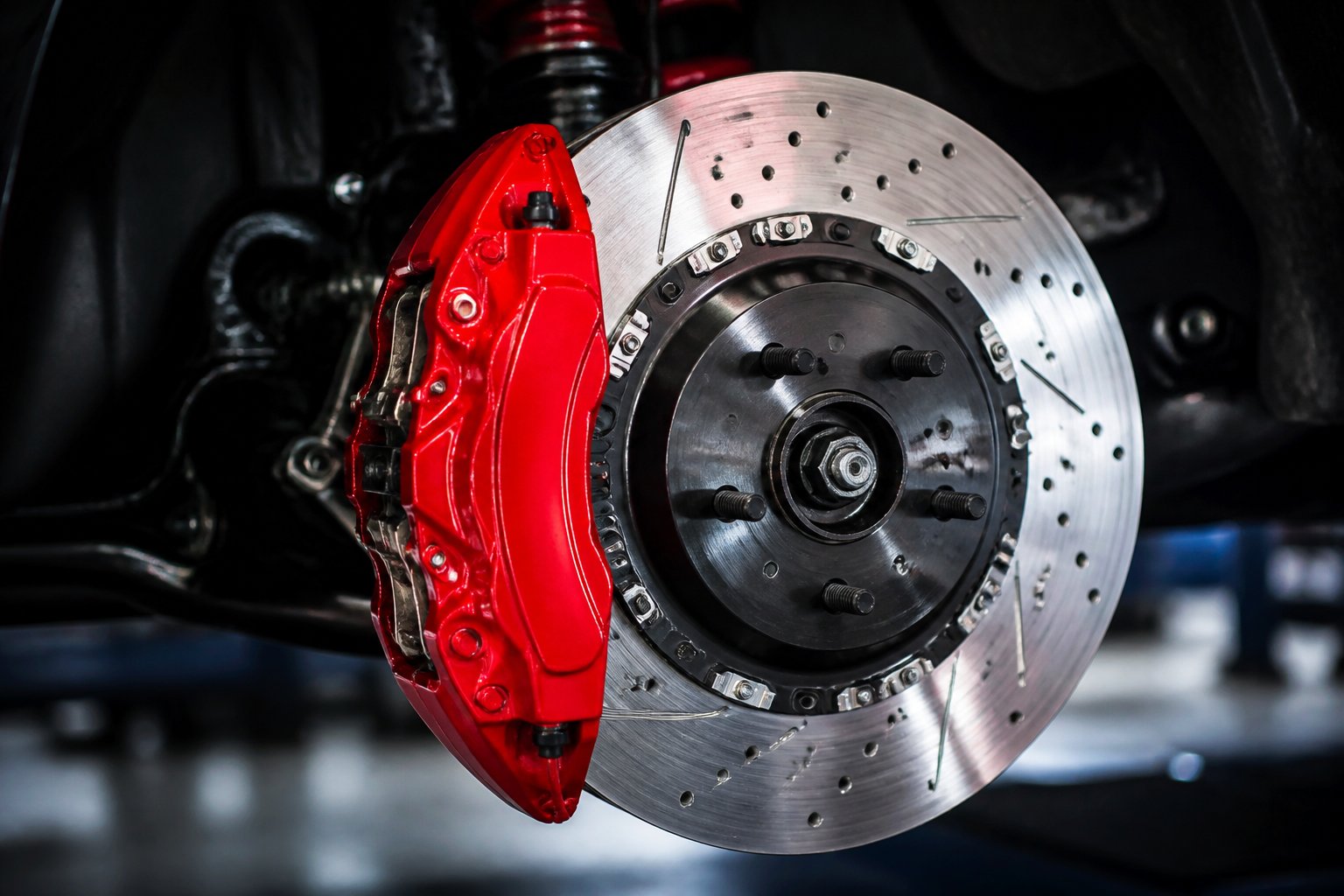
Multi-piston calipers distribute clamping force more evenly across brake pads than single-piston designs. Four-piston and six-piston calipers provide stronger, more consistent pressure for better modulation and stopping power.
Upgraded calipers work with supporting hardware to reduce noise and improve performance. Dual-layer rubberized shims dampen vibrations between pads and calipers, eliminating squealing. Stainless steel hardware resists corrosion and maintains proper pad positioning better than standard steel clips and pins.
Your caliper choice depends on your wheel size and intended use. Larger multi-piston calipers require wheels with enough clearance and offer the biggest performance gains for track or aggressive street driving.
Supporting Components: Brake Fluid and Lines
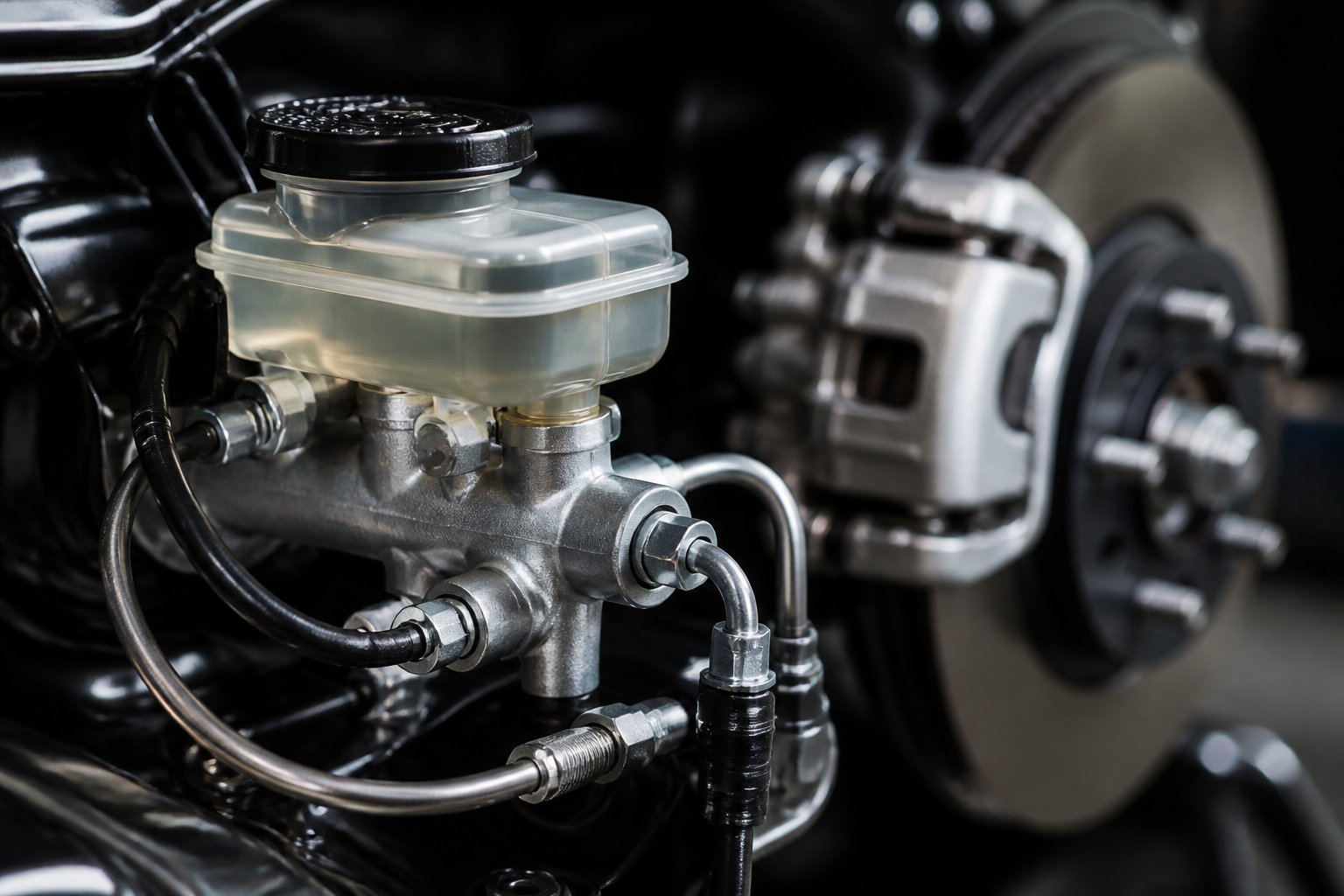
Brake fluid and lines work together to transfer hydraulic pressure from your brake pedal to your calipers. The right fluid prevents fade under high heat, while upgraded stainless steel brake lines eliminate expansion for better pedal feel and response.
Choosing the Right Brake Fluid
Brake fluid operates under extreme temperatures and must maintain consistent performance when your brakes heat up. The DOT rating system tells you the fluid’s boiling point. DOT 3 has the lowest boiling point, while DOT 4 and DOT 5.1 offer higher temperature resistance for performance driving.
Your brake fluid absorbs moisture over time, which lowers its boiling point and reduces effectiveness. This is why you need to change it regularly, typically every 1-2 years depending on your driving conditions. For track use or aggressive street driving, DOT 4 or DOT 5.1 fluid provides better protection against brake fade.
The wet boiling point matters just as much as the dry boiling point. This measures performance after the fluid has absorbed moisture. Performance fluids maintain higher wet boiling points, giving you more consistent braking even as the fluid ages.
Upgrading to Stainless Steel Brake Lines
Factory rubber brake lines expand under pressure, creating a spongy pedal feel and slower brake response. Stainless steel brake lines solve this problem by using a braided steel construction that doesn’t expand. You’ll notice a firmer pedal and more immediate braking response right away.
The upgrade is relatively affordable compared to other brake modifications. Stainless steel lines also last longer than rubber lines and resist damage from road debris and aging. They’re especially valuable for performance driving where precise brake modulation matters.
These lines maintain consistent pressure delivery to your calipers. This means the force you apply at the pedal translates directly to clamping force at your rotors without loss from line expansion.
Hi-Temp Brake Lubricant and Hardware Considerations
Hi-temp brake lubricant prevents your caliper slides and pins from seizing, which ensures even pad wear and proper brake function. You need lubricant rated for brake system temperatures, typically above 500°F. Regular grease will burn off and leave your components stuck.
Apply lubricant to caliper slide pins, pad backing plates, and caliper brackets during installation. This keeps everything moving freely and prevents noise from vibration. Don’t put lubricant on the friction surface of pads or rotors.
Quality hardware kits include new clips, springs, and anti-rattle components. These small parts wear out and affect how your pads seat and retract. Fresh hardware ensures your new brake kit performs as designed and reduces brake noise.
Popular & Proven Performance Brake Kits
Several brake kits have earned strong reputations through real-world testing and customer feedback. The PowerStop Z23 Evolution stands out as a popular choice, while other manufacturers offer competitive options worth considering.
PowerStop Z23 Evolution Sport Brake Upgrade Kit
The PowerStop Z23 Evolution Sport Brake Upgrade Kit delivers a complete braking solution for daily drivers who want better stopping power. This kit includes drilled and slotted rotors along with Z23 carbon-fiber ceramic brake pads. The rotors feature a zinc plating that resists rust and corrosion better than standard rotors.
You get noticeably improved brake bite compared to stock components. The drilled and slotted design helps dissipate heat during repeated stops. The carbon-fiber ceramic pads produce less brake dust than standard semi-metallic pads, which keeps your wheels cleaner.
PowerStop designs the Z23 Evolution for street performance rather than track use. The kit works well for spirited daily driving, light towing, and occasional performance driving. Installation uses your existing brake hardware, making the upgrade straightforward for most vehicles.
Overview of Other Market Leaders
Brembo offers high-end brake kits known for exceptional stopping power and heat resistance. Their systems often include larger rotors and multi-piston calipers for serious performance applications.
StopTech provides mid-to-high range options with slotted rotors and performance pad compounds. Their kits balance street comfort with track capability.
EBC Brakes manufactures various performance levels, from their Stage 1 street kits to Stage 5 extreme performance packages. Wilwood specializes in lightweight aluminum calipers and large-diameter rotors for racing applications. Each manufacturer targets different performance needs and budgets, so match the kit to your specific driving requirements.
Selecting the Right Kit for Your Driving Needs
Your brake kit should match how you actually use your vehicle. The type of driving you do, whether your car can physically accommodate the upgrade, and how much you’re willing to spend all play major roles in choosing the right setup.
Daily Driving vs. Track Day and Performance Use
Street driving demands different brake characteristics than track use. For daily commuting, you need brakes that work well when cold, produce minimal dust, and operate quietly. Standard upgraded brake kits with ceramic or semi-metallic pads handle normal driving without creating noise or excessive wear.
Track days and aggressive driving require performance brakes designed for sustained high temperatures. High-performance brakes use different pad compounds that resist fade during repeated hard stops. These pads often need heat to work properly, which makes them less effective for cold morning commutes.
If you split time between street and track, you’ll need to compromise. Some kits offer street-track hybrid pads that provide decent performance in both environments. You can also swap pad compounds seasonally if you have the time and tools.
Vehicle Fitment and Installation Considerations
Not every brake kit fits every vehicle. You need to verify that the calipers, rotors, and mounting brackets work with your specific make and model. Some vehicles require wheel spacers because larger calipers don’t fit behind stock wheels.
Brake kits come in direct bolt-on or custom configurations. Direct bolt-on kits install using factory mounting points without modifications. Custom kits may require bracket fabrication or suspension changes. Check the rotor diameter and caliper size against your wheel’s inner clearance before buying.
Balancing Budget, Longevity, and Upgradability
Entry-level performance brake kits start around $300-500 and offer noticeable improvements over stock. Mid-range kits ($800-1,500) typically include better rotors and higher-quality pads. Premium high-performance brakes can exceed $3,000 but provide track-ready stopping power.
Cheaper kits may require more frequent pad replacements. Higher-end options use more durable materials that last longer under hard use. Consider the cost per mile rather than just the upfront price.
Some kits allow component upgrades without replacing the entire system. Modular designs let you swap pads, upgrade rotors, or add stainless steel brake lines later. This flexibility helps you spread costs over time while improving performance gradually.
Frequently Asked Questions
Choosing the right brake kit requires understanding how different components work together and match your specific needs. The answers below address common questions about compatibility, performance trade-offs, and when to upgrade supporting brake components.
What factors should I consider when selecting a brake kit for my driving style and vehicle use?
Your driving style determines which brake components will serve you best. Daily drivers benefit from kits that balance stopping power with low dust and quiet operation. Track-focused setups need components that resist heat and maintain performance under repeated hard stops.
Vehicle weight plays a major role in brake selection. Heavier trucks and SUVs require more aggressive pad compounds and larger rotors than lighter sports cars. Your typical driving conditions matter too—mountain roads with steep descents demand better heat management than flat highway commutes.
Consider how often you’ll push your brakes hard. Weekend track enthusiasts need different specs than someone who occasionally drives spiritedly on back roads. Match your brake kit to your most demanding use case, not your average commute.
How do big brake kits compare to upgraded pads and rotors in real-world performance gains?
Upgraded pads and rotors improve stopping power and heat dissipation without changing your brake system’s basic structure. This option costs less and works well for street-driven cars with occasional spirited driving. You’ll notice better pedal feel and more consistent performance during hard stops.
Big brake kits add larger rotors and multi-piston calipers that clamp with more force across a bigger surface area. The increased rotor size provides better heat management and more stopping power. Multi-piston calipers distribute pressure more evenly than single-piston designs, which reduces pad taper and improves bite.
The performance gap becomes clear during sustained hard braking. Big brake kits maintain consistent pedal feel and stopping distances even after multiple hard stops. Upgraded pads and rotors on stock calipers will fade faster under the same conditions.
Which rotor design is best for performance and durability: blank, slotted, drilled, or two-piece?
Blank rotors offer the longest lifespan and work well for daily driving with occasional hard stops. They provide a smooth, consistent surface that’s less prone to cracking. Most stock vehicles use blank rotors because they balance cost, durability, and adequate performance.
Slotted rotors feature machined grooves that sweep away brake dust and gases while providing consistent bite. They handle heat better than blank rotors and resist fade during hard use. The slots do wear pads slightly faster, but they last longer than drilled rotors.
Drilled rotors release heat and gases through holes in the rotor face, which helps prevent glazing in wet conditions. They look aggressive but crack more easily under extreme heat cycles. Avoid drilled rotors for track use or heavy vehicles.
Two-piece rotors separate the friction ring from the mounting hat, allowing for thermal expansion without warping. They reduce unsprung weight and typically cost more than one-piece designs. This design suits serious track work and high-performance street cars where the benefits justify the expense.
How do I ensure a brake kit is compatible with my wheel size, caliper clearance, and hub fitment?
Measure the inside diameter of your wheels before buying any brake kit. Larger calipers and rotors need adequate clearance—typically at least 3-5mm of space between the caliper and wheel spokes. Many performance kits require 17-inch wheels or larger to fit properly.
Check your vehicle’s hub dimensions and bolt pattern. The rotor must match your hub’s center bore diameter and use the correct number of mounting holes. Some kits require hub-centric rings or specific hardware to mount correctly.
Verify brake line compatibility if your new kit positions calipers differently than stock. You may need longer brake lines or different banjo fittings. Contact the manufacturer with your exact vehicle year, make, model, and wheel specifications before purchasing.
What is the trade-off between braking performance, brake dust, noise, and rotor wear with different pad compounds?
Aggressive performance pads bite harder and resist fade at high temperatures better than street pads. They create more brake dust, squeal during normal stops, and need heat to work properly. Cold performance pads offer poor stopping power until they reach operating temperature.
Street pads prioritize quiet operation, minimal dust, and good cold performance over maximum stopping power. They work well for daily driving but fade quickly during repeated hard stops or track use. Modern ceramic compounds reduce dust significantly while maintaining decent stopping power.
Semi-metallic pads split the difference, offering better heat resistance than ceramic with more dust than pure track pads. They handle spirited street driving and occasional track days. Expect more noise and dust than ceramic pads but better fade resistance.
Rotor wear correlates with pad aggressiveness. Harder racing compounds eat rotors faster than softer street pads. Budget for more frequent rotor replacement if you choose track-focused pad compounds.
When should I upgrade brake lines, brake fluid, or the master cylinder alongside a brake kit?
Upgrade brake lines when installing a big brake kit or if your stock lines are over ten years old. Stainless steel braided lines don’t expand under pressure like rubber lines, giving you firmer pedal feel. The improvement becomes obvious during hard stops when rubber lines would normally feel spongy.
Replace brake fluid with high-temperature DOT 4 or DOT 5.1 fluid when upgrading to performance pads and rotors. Higher dry and wet boiling points prevent vapor lock during hard use. Track-focused setups benefit from racing brake fluid with even higher boiling points, though it absorbs moisture faster and needs more frequent changes.
Consider a larger master cylinder if your new big brake kit has significantly more piston volume than stock. An undersized master cylinder requires excessive pedal travel to move enough fluid. Most quality big brake kits account for this, but custom setups may need master cylinder upgrades for proper pedal feel and travel distance.