Finding the right car parts online can feel uncertain when you’re not sure whether a component will actually fit your vehicle.
Yes, specialized online auto parts stores do provide detailed product descriptions and comprehensive compatibility information, typically through VIN lookups, OEM part number cross-references, and year-make-model fitment databases.
These tools help eliminate guesswork and ensure you order exactly what your vehicle needs.
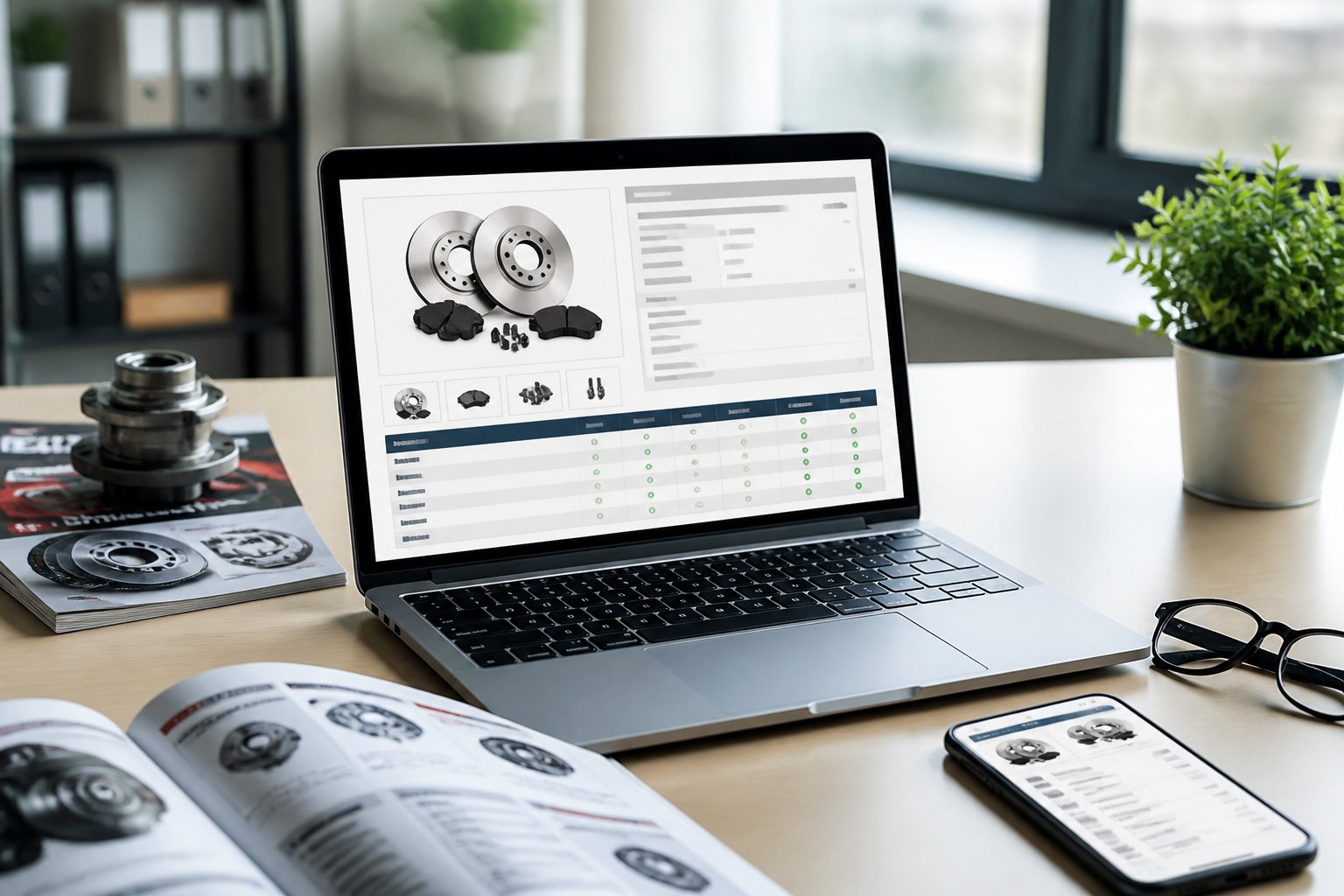
We’ve seen significant improvements in how online retailers present technical specifications and compatibility data.
Modern platforms combine manufacturer databases with advanced search tools that verify fitment before you complete a purchase.
This approach reduces returns and gives you confidence that parts will work with your specific vehicle configuration.
Throughout this guide, we’ll explore how online stores organize their product information, what compatibility tools are available to you, and how to leverage catalogs and support resources to make informed purchasing decisions.
We’ll also cover shipping policies and innovative features that make buying car parts online more reliable than ever.
How Online Stores Provide Comprehensive Product Descriptions
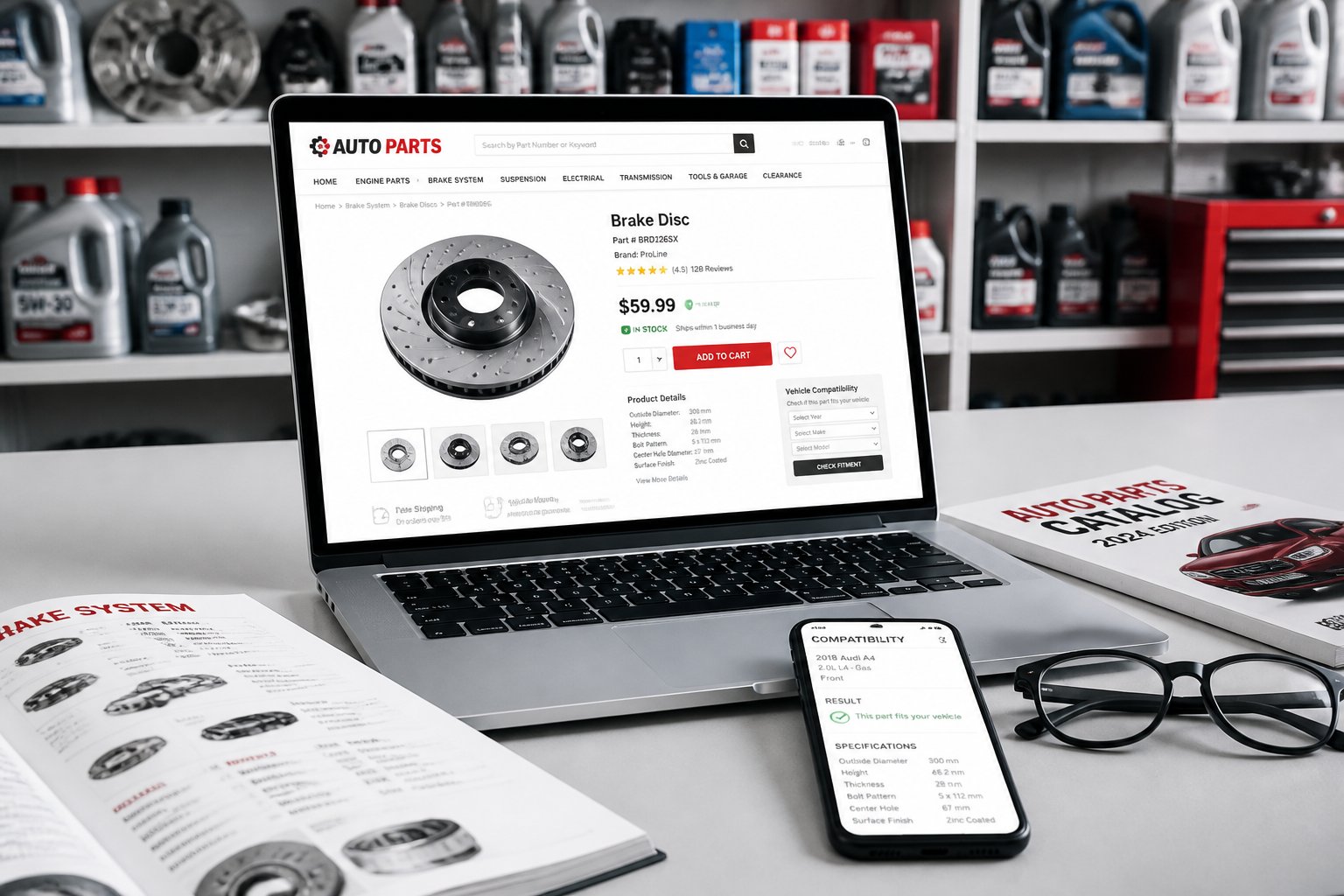
Specialized auto parts stores enhance product pages with structured technical data, visual resources, and manufacturer specifications.
These elements work together to replicate the information-gathering experience of visiting a physical parts counter.
Key Elements of Detailed Descriptions
Effective product descriptions for car parts include several critical components.
The product name appears with the manufacturer’s brand, followed by a clear explanation of the part’s function and application.
Material composition, dimensions, and weight specifications help us verify fitment requirements.
Quality stores provide compatibility lists that specify which vehicle makes, models, years, and engine types work with each part.
Condition information distinguishes between new, remanufactured, or aftermarket options.
Installation notes may include torque specifications, required tools, or warnings about special procedures.
Product descriptions also indicate warranty coverage, return policies, and shipping restrictions for hazardous materials.
Stores may include common failure symptoms that lead customers to need replacement parts.
Role of Exploded and Visual Diagrams
Exploded diagrams show how individual components fit within larger assemblies.
These visual diagrams display parts in their disassembled state with numbered callouts that correspond to parts catalogs.
We can identify the exact piece we need and understand its relationship to surrounding components.
Interactive diagrams allow us to click on specific parts to view detailed information or add items to our cart.
Some stores integrate these visual tools directly with OEM catalog data, maintaining manufacturer-standard part organization.
Photographs from multiple angles supplement diagrams by showing the actual part appearance, mounting points, and connector types.
OEM Part Numbers and Technical Specifications
OEM part numbers serve as universal identifiers that eliminate ambiguity in the ordering process.
Each OEM number corresponds to a specific part designed by the vehicle manufacturer.
Stores display these numbers prominently, often listing both the primary OEM number and any superseded or cross-referenced alternatives.
We rely on OEM parts data to verify authenticity and compatibility.
Technical specifications include measurements like bore diameter, thread pitch, electrical resistance, or fluid capacity.
Stores may cross-reference aftermarket part numbers with original OEM numbers to help us find cost-effective alternatives.
The OEM catalog structure typically organizes parts by vehicle system, making navigation intuitive for customers familiar with automotive terminology.
Advanced Compatibility and Fitment Information
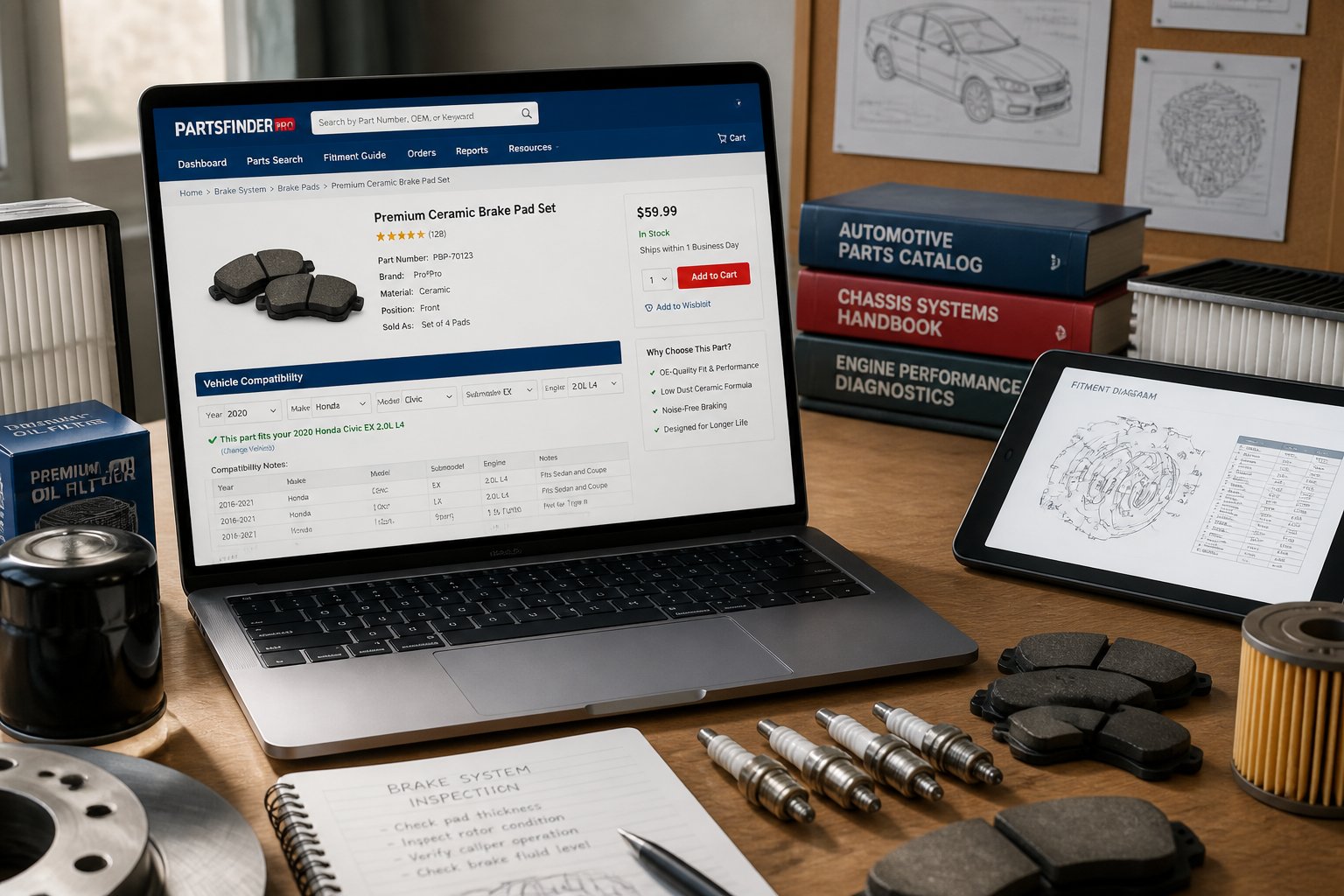
Specialized online stores provide technical tools that verify whether specific parts match your vehicle’s exact specifications.
These systems rely on vehicle identification numbers, manufacturer databases, and structured compatibility data to prevent ordering mistakes.
VIN Lookup and Decoding Tools
A vehicle identification number contains 17 characters that encode over 100 specifications about your car.
When we enter this VIN into a parts store’s lookup system, the tool decodes details like engine type, transmission, trim level, and manufacturing date.
VIN decoding eliminates guesswork by pulling exact vehicle configuration data.
Some platforms charge around $1.99 for comprehensive VIN decoding that reveals specifications necessary for parts matching.
The decoded information automatically filters catalog results to show only compatible components.
VIN-based searches account for mid-year production changes and special editions that standard dropdown menus might miss.
Guaranteed Fitment Features
Guaranteed fitment means the retailer confirms a part will physically install and function correctly on your specific vehicle.
Stores achieve this through structured fitment data that maps parts to compatible year ranges, makes, models, trims, and engine codes.
Advanced retailers integrate directly with OEM catalogs and ACES (Aftermarket Catalog Exchange Standard) databases.
These connections provide factory-level compatibility information rather than estimates.
We can verify fitment by checking whether the listing explicitly states compatibility with our vehicle’s complete configuration.
Some platforms report fitment accuracy rates above 99%, backed by return policies if the confirmed part doesn’t fit.
This protection reduces the financial risk of ordering complex components online.
Applicability Across Models and Years
Parts applicability data shows which components interchange across different vehicles.
An alternator designed for a 2024 sedan might also fit the 2025 and 2026 models, or work in the wagon variant with the same engine.
OEM catalogs contain official cross-reference data showing part number applicability across model years and trim levels.
We can identify which vehicles share identical components by searching part numbers in these factory databases.
This information helps locate compatible used parts or find better pricing on equivalent components marketed under different vehicle applications.
Aftermarket manufacturers often design parts with broader applicability than OEM equivalents.
Their listings include compatibility tables spanning multiple brands when components share mounting points and specifications.
Using Catalogs and Tools to Ensure the Right Part
Modern parts catalogs provide structured access to OEM part numbers, compatibility data, and cross-reference tools that eliminate guesswork when ordering components.
We can verify fitment through multiple methods including VIN-based lookups and manual vehicle selection.
Exploring OEM Catalogs and Aftermarket Catalogs
OEM catalogs contain factory part numbers, exploded diagrams, and technical specifications directly from manufacturer databases.
These catalogs organize components by vehicle system and include part relationships that show how pieces connect.
We access accurate fitment data for specific vehicle configurations through these official sources.
Aftermarket catalogs provide alternative options with compatibility listings that reference original OEM numbers.
Many aftermarket suppliers cross-reference their parts to OEM part numbers, making it easier to find equivalent components.
We can compare specifications, materials, and warranty terms between OEM and aftermarket options within these catalogs.
Both catalog types typically include detailed product descriptions covering dimensions, materials, and technical specifications.
The key difference lies in sourcing—OEM catalogs guarantee factory specifications while aftermarket catalogs offer broader pricing options.
Manual Brand and Model Selection
Manual selection requires us to input vehicle year, make, model, and sometimes engine type or trim level.
This method filters the parts catalog to show only components that fit our specific vehicle configuration.
We navigate through category menus like engine, transmission, or suspension to locate the needed part.
Many catalogs display exploded diagrams showing part locations and relationships with surrounding components.
These visual references help us identify the exact piece we need.
Part numbers appear alongside each component with current availability and pricing information.
Cross-Referencing Part Numbers
We verify compatibility by entering known OEM numbers into catalog search functions.
The system returns matching parts from both OEM and aftermarket suppliers with equivalent specifications.
This cross-referencing confirms that replacement parts meet original manufacturer standards.
VIN-based searches provide the most precise results by decoding our vehicle’s exact factory specifications.
We enter the 17-character VIN to access a parts list tailored to our specific build configuration.
This method accounts for production variations that affect part compatibility across the same model year.
Returns, Shipping, and Customer Support in Online Purchases
When we purchase car parts online, the quality of post-purchase support matters just as much as finding the right component.
Strong return policies, reliable shipping, and responsive customer service help us buy with confidence and resolve issues quickly.
Handling Returns and Reducing Errors
Most specialized auto parts retailers maintain structured return processes to handle incorrect orders or incompatible parts.
RockAuto allows us to modify shipping addresses and other order details through their Order Status page, though address changes may require additional payment if shipping costs increase.
AutoZone provides support through their customer service line at 1-800-288-6966, where representatives can locate purchase information and guide us through returns.
We should always verify compatibility before ordering to minimize return needs.
Many stores require authorization numbers before accepting returns, so we need to contact customer support first rather than shipping items back directly.
Some retailers specify particular labeling requirements or restocking fees for returns.
When we do need to return electronic components like sensors or control modules, we must erase any stored data first.
Clear return policies that outline timeframes, conditions, and procedures help us understand our options if parts don’t fit or meet our needs.
Fast Shipping and Order Fulfillment
Shipping speed varies significantly between online auto parts stores and affects how quickly we can complete repairs.
Many retailers offer multiple shipping options ranging from standard ground delivery to expedited services for urgent repairs.
We can track orders through most major auto parts websites using order numbers and email confirmations.
This tracking capability lets us plan repair schedules and know exactly when parts will arrive.
Some stores maintain regional distribution centers that enable faster delivery to certain areas.
Dealer Support and Global Marketplace Options
Dealership parts departments now compete with specialized online stores and global marketplaces by offering their own digital ordering systems.
These dealer channels provide manufacturer-certified OEM parts with guaranteed compatibility for specific vehicle makes and models.
Global marketplaces expand our access to hard-to-find components and international suppliers.
We must carefully evaluate seller ratings, shipping times from overseas locations, and warranty coverage when ordering from international sources.
Specialized stores like RockAuto and AutoZone typically offer more consistent customer support compared to marketplace sellers, with dedicated service teams familiar with automotive applications.
Additional Resources and Innovative Features for Buyers
Modern specialized auto parts stores now offer advanced digital tools that help buyers make informed decisions, including AI-powered assistance, comprehensive hardware specifications, and real-time updates on part supersessions.
AI-Assisted Recommendations and Troubleshooting
We’re seeing specialized parts retailers integrate AI mechanic tools that analyze vehicle symptoms and recommend compatible components. These systems use diagnostic algorithms to match error codes, performance issues, and maintenance schedules with appropriate replacement parts.
When we input specific problems like unusual noises or dashboard warnings, the AI cross-references our vehicle’s make, model, and year to suggest relevant solutions. Some platforms now offer virtual troubleshooting guides that walk us through diagnostic steps before purchasing.
This helps verify we’re ordering the correct components and reduces return rates. The AI can also flag potential related issues, suggesting we inspect connected systems or order complementary parts in a single transaction.
Integration of Fasteners and Hardware Details
Specialized online stores increasingly include fasteners, clips, and mounting hardware in their product listings. We can now view which bolts, nuts, washers, and retaining clips come with a part or need separate ordering.
This level of detail prevents project delays when we discover missing hardware mid-installation. Many retailers provide exploded diagrams that show every component in an assembly with corresponding part numbers.
These visual breakdowns help us identify not just the main part but every fastener and bracket in the system. We can zoom into specific areas, click individual components, and add them directly to our cart based on what our repair actually requires.
Staying Up to Date with Supersession Data
Parts supersession occurs when manufacturers discontinue components and replace them with updated versions. Quality specialized stores maintain databases that automatically show us superseded part numbers and their current replacements.
When we search for an older part number, the system displays the new equivalent with applicability notes explaining any design changes. We can see the entire supersession chain, tracking how a part evolved through multiple revisions and understanding which version offers the best fit for our specific model year.
Frequently Asked Questions
Online car parts stores provide multiple verification methods and data points to ensure proper fitment. Shoppers often need guidance on using VIN decoders, cross-reference tools, and product specifications effectively.
Understanding return policies and compatibility checks helps prevent ordering errors.
How can I confirm a car part will fit my specific year, make, model, and trim?
We recommend using the VIN lookup tool available on most specialized parts websites. This method provides the most accurate results because it identifies your exact vehicle configuration, including trim level and factory-installed options.
Many sites also offer dropdown menus where we can select year, make, model, and trim manually. This approach requires careful attention to sub-models and special editions that may have different part requirements.
We should always cross-reference the part number displayed in search results with our vehicle’s original part number when possible. The product page typically shows a compatibility list or fitment notes that specify which configurations work with that particular component.
What vehicle information (VIN, engine code, drivetrain) is required to verify compatibility before ordering?
The VIN provides the most comprehensive vehicle data and is sufficient for most compatibility checks. We can locate it on the driver’s side dashboard, door jamb, or vehicle registration documents.
Engine code becomes critical when ordering engine-specific components like sensors, gaskets, or internal parts. Different engine options within the same model year often require distinct parts.
We can find this code on the engine block itself or in the owner’s manual. Drivetrain information matters for suspension, brake, and transmission components.
We need to know whether our vehicle has front-wheel drive, rear-wheel drive, or all-wheel drive, as these configurations use different part designs.
Where can I find OEM, OE-equivalent, and aftermarket cross-reference numbers for a part?
Specialized online stores maintain databases that link OEM part numbers with aftermarket equivalents. We can typically enter an OEM number into the search bar to see all compatible alternatives from various manufacturers.
The product listing itself usually displays both the manufacturer’s part number and any cross-reference numbers. Some sites provide dedicated comparison charts showing how different brands correspond to the original equipment number.
We can also access exploded diagrams sourced from factory databases, which show OEM part numbers in context with surrounding components. These diagrams help us identify the exact part location and its official designation.
Do product listings typically include detailed specifications such as dimensions, material, and sensor or connector types?
Quality specialized stores provide technical specifications in a dedicated section of each product page. We can expect to find dimensions, weight, material composition, and finish details for most components.
Electrical parts typically list connector types, pin configurations, and whether harnesses or adapters are included. Sensor listings often specify output type, operating range, and thread size when applicable.
Some stores include high-resolution images showing mounting points, connector ends, and part markings. We should examine these photos to verify physical characteristics match our original component.
How can I determine whether a part is compatible with optional equipment packages or mid-year production changes?
VIN-based searches automatically account for factory options and production changes because they decode our specific build date and equipment codes. This eliminates guesswork about package-specific variations.
Product compatibility notes often mention specific equipment requirements or exclusions. We should read these carefully, as they might state requirements like “for vehicles with sport suspension” or “excludes models built after March 2025.”
Mid-year changes pose particular challenges because year alone doesn’t guarantee compatibility. We can check our vehicle’s build date on the door jamb sticker and contact customer support if the listing doesn’t specify production date ranges.
What should I check in the return or exchange policy if the part arrives but does not match my vehicle?
We need to verify the return window duration, which typically ranges from 30 to 90 days for unused parts.
Some stores impose shorter periods for electrical components or special-order items.
Restocking fees can apply even when we order the wrong part unintentionally.
We should confirm whether the store waives these fees for compatibility errors versus customer ordering mistakes.
Return shipping costs and procedures vary significantly between retailers.
We must determine who pays for return shipping and whether we need to obtain a return authorization number before sending parts back.